The conversation around CBD oil in Pakistan is full of confident claims and weak explanations. Some sellers talk as if everything is already clear. Some critics act as if nothing has changed at all. The reality is more nuanced, especially with CCRA shaping the wider cannabis framework. CBD Pakistan helps readers understand what that shift may mean for CBD oil, THC thresholds, product credibility, and smarter buying decisions.
The short answer: CCRA could reshape how CBD oil is regulated, sold, and trusted in Pakistan
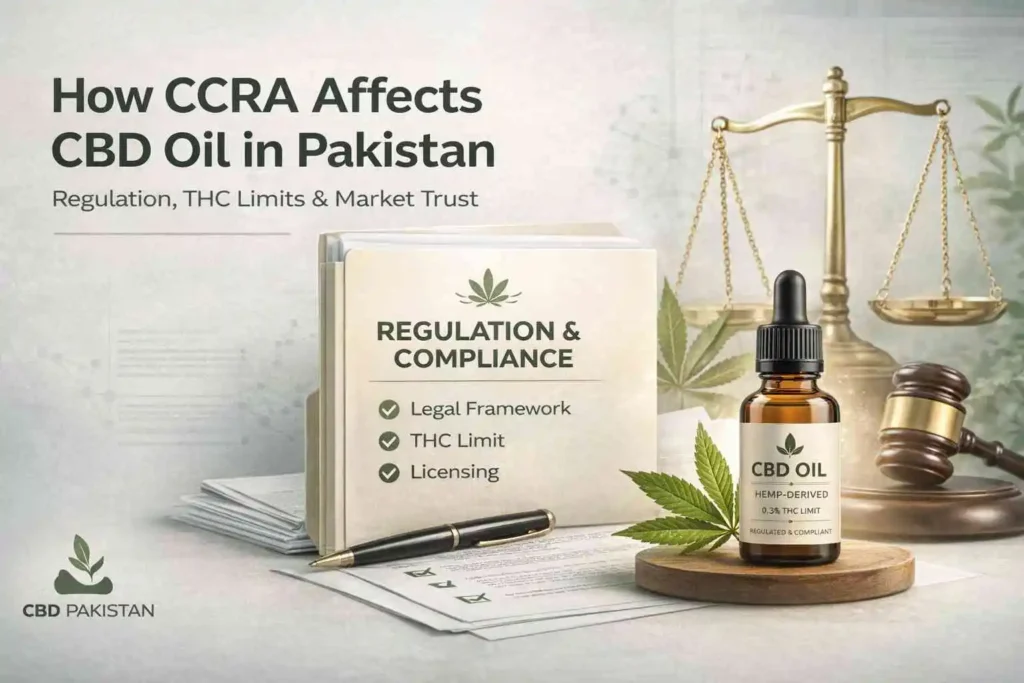
CCRA may affect CBD oil in Pakistan because the authority was created to regulate the cultivation of cannabis, along with the extraction, refining, manufacturing, and sale of derivatives of the plant for medicinal and industrial use. Since CBD oil is a cannabis-derived product, any tighter framework around derivatives, THC thresholds, licensing, and compliance can directly affect how CBD products are classified, marketed, and trusted in the Pakistani market.
That does not mean every CBD bottle on the market is now automatically approved, legal, or compliant. It means the regulatory environment around cannabis derivatives is no longer something serious businesses can ignore. Let’s be real—this is exactly where weak sellers get exposed.
What is CCRA and why does it matter for CBD oil?
CCRA is Pakistan’s Cannabis Control & Regulatory Authority, a federal body created under the Cannabis Control and Regulatory Authority Act, 2024. Its public mandate is to regulate cannabis cultivation and downstream activities including extraction, refining, manufacturing, and sale of derivatives for medicinal and industrial purposes. The authority is active through its official site and licensing framework, and its policy material says the 2025 national cannabis policy acts as the legal roadmap for regularising the sector.
This matters for CBD oil because CBD is not just a plant topic. It is a derivative, and CCRA’s framework reaches into derivatives directly. If you want the full background first, What Is CCRA in Pakistan?.
How CCRA may affect CBD oil in Pakistan
1. Stricter rules on what counts as legal hemp-derived products
One major effect of CCRA is that it creates pressure for clearer distinctions between lawful industrial or medicinal cannabis products and unregulated market claims. Reporting on Pakistan’s cannabis framework notes a 0.3% THC limit aligned with the regulatory model, and CCRA-linked policy materials repeatedly frame the industry around controlled medicinal and industrial use rather than open-ended commercial cannabis.
That matters because a CBD oil seller cannot just throw “hemp-derived” on a label and expect that to settle the issue. Product classification starts to matter more when the regulatory state starts paying attention.
2. More focus on THC limits and product classification
The current reporting around Pakistan’s cannabis framework repeatedly points to a 0.3% THC threshold, which is presented as a safeguard against abuse and as a basis for legal hemp-style regulation. That means CBD oil in Pakistan may face closer scrutiny around how much THC it contains, how it is described, and whether it fits within a lawful category.
For readers who need the THC side explained properly, THC Limit for Hemp in Pakistan.
3. Greater scrutiny on extraction, manufacturing, and derivatives
This is the part most buyers miss. CCRA’s mandate does not stop at cultivation. It explicitly includes extraction, refining, manufacturing, and sale of derivatives. That means the impact on CBD oil may be strongest not at the farm level, but in the middle and downstream parts of the supply chain where oils, extracts, and finished products are produced and sold.
In practical terms, this could affect:
- how CBD oil is sourced
- how it is processed
- how businesses document compliance
- how products are labeled and marketed
- how authorities distinguish serious operators from opportunists
4. Better pressure for compliance, traceability, and quality control
CCRA’s policy direction points toward a more structured system based on regulation, control, and oversight. The 2025 national policy is described by CCRA as the legal roadmap for controlling and regularising the cannabis industry, while recent reporting says the policy aims to curb misuse and market manipulation and support regulated cultivation and manufacturing for medicinal and industrial purposes.
That could be good news for buyers. In Pakistan, too many people have already spent good money on products they do not fully understand, especially in cities where online sellers move fast and explanations move slow. A more structured framework can force the market toward better transparency—at least in theory.
Will CCRA make CBD oil legal or illegal in Pakistan?
This is where careless writers usually wreck the article.
The honest answer is: CCRA does not mean all CBD oil is automatically legal, and it does not mean all CBD oil is automatically banned either. What it does mean is that cannabis-derived products are now more clearly within a formal regulatory framework for medicinal and industrial use, especially where THC limits, licensing, and derivatives are concerned. Whether a specific CBD product is compliant depends on how it is sourced, processed, categorized, and handled within that framework.
For the broader legality discussion, Is CBD Legal in Pakistan?.
What this may mean for CBD buyers
For buyers, CCRA may affect CBD oil in Pakistan in a few practical ways.
First, product claims may start mattering more. If a brand cannot explain what it sells, what category it falls into, or how it handles THC and sourcing questions, that is a red flag.
Second, trust may shift toward brands that educate clearly. In a market where confusion is common, the brands that explain the rules, the product type, and the quality standard usually look more credible.
Third, buyers may need to become less lazy. A nice label, imported-looking packaging, or Instagram hype proves nothing. Regulation does not protect people who refuse to ask basic questions.
What this may mean for CBD brands and sellers
For CBD businesses, CCRA is not just a legal story. It is a business filter.
Brands may face more pressure to:
- understand how their products fit into medicinal or industrial categories
- keep THC-related issues in view
- improve documentation and transparency
- avoid sloppy or exaggerated claims
- align with a more traceable supply chain
This is where CBD Pakistan can position itself intelligently: not by pretending regulation is simple, but by helping customers navigate it with straightforward education and a more serious approach to product trust.
How to judge CBD oil more carefully in Pakistan
Here’s the practical checklist readers actually need.
Before buying CBD oil, ask:
- Is the brand clear about what the product is?
- Does it explain whether the oil is hemp-derived and how it approaches THC?
- Does it sound like the company understands Pakistan’s evolving cannabis framework?
- Does it educate you, or does it just sell at you?
Here’s the thing: when regulation tightens, the biggest loser is usually the vague seller. The careful buyer wins by asking better questions early.
Final takeaway
CCRA may affect CBD oil in Pakistan by tightening the framework around cannabis derivatives, THC thresholds, licensing expectations, manufacturing scrutiny, and overall market trust. The authority’s legal mandate covers cultivation, extraction, refining, manufacturing, and sale of derivatives for medicinal and industrial use, which means CBD oil sits close enough to the regulated core that businesses and buyers cannot afford to ignore it.