If you are curious about CBD oil but worried it might make you hallucinate, feel out of control, or trigger a bad mental reaction, this guide is for you. A lot of first-time buyers in Pakistan hear mixed claims online, especially when low-quality products and THC-heavy products get lumped together with CBD. At CBDOILS.PK, we focus on clear education, transparent product standards, and practical guidance so you can understand what CBD is, what it is not, and where the real risks actually sit.
Let’s get straight to it: pure CBD oil is not known for causing hallucinations. CBD is generally described as non-intoxicating or non-psychoactive, while THC is the cannabis compound linked with the “high,” altered perception, and in some cases more serious mental effects.
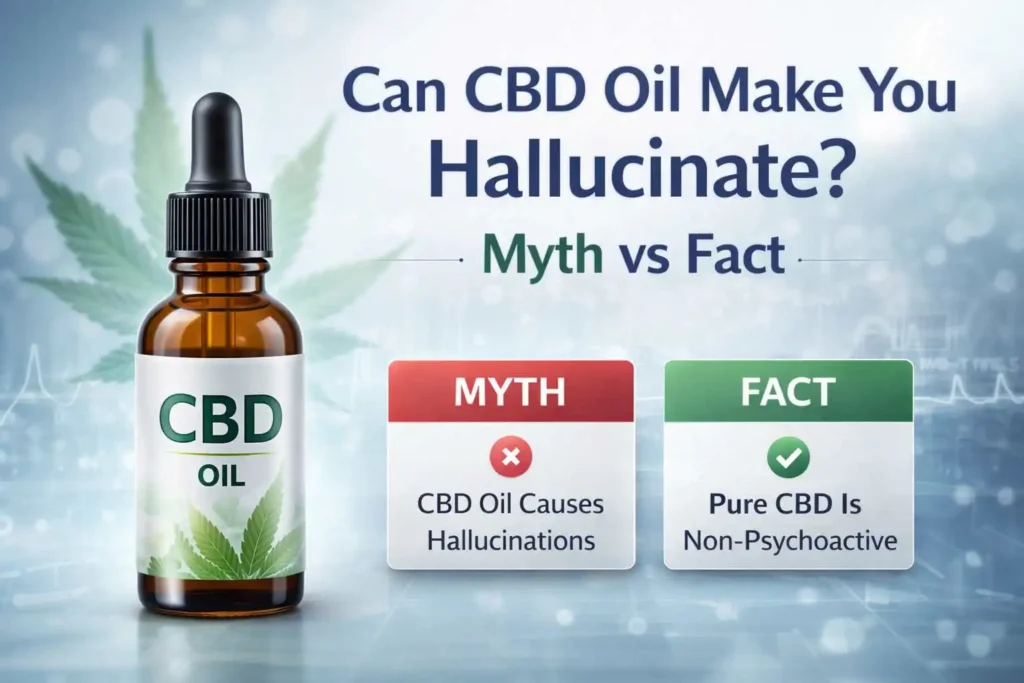
Myth vs Fact: Can CBD Oil Make You Hallucinate?
Myth: CBD oil can make anyone see things or lose touch with reality
That claim confuses CBD with THC, contaminated cannabis products, or synthetic cannabinoids. THC is the compound most associated with intoxication and changes in perception. NIDA notes that cannabis products with THC can change mood, thoughts, and perception of reality.
Fact: Pure CBD does not usually cause a high or hallucinations
CBD is widely described in scientific and medical literature as non-intoxicating. It affects the body differently than THC and does not produce the same euphoric or reality-altering effects people associate with getting stoned.
Fact: Some people blame “CBD” when the real issue is THC or a bad product
This happens more than it should. A person buys an unregulated oil, gummy, or vape labeled as CBD, but the product may contain more THC than expected or may be inaccurately labeled. The FDA has repeatedly warned that there are still major safety and quality questions around many CBD products on the market.
Why People Think CBD Oil Causes Hallucinations
1. They confuse CBD with THC
This is the biggest reason. CBD and THC come from the same plant, but they are not the same thing. THC is the main psychoactive compound in cannabis. CBD is not. If your reader does not understand that distinction, the rest of the article fails.
For a deeper breakdown, see our guide on CBD vs THC.
2. They used a full-spectrum product without understanding it
Full-spectrum CBD may contain trace amounts of THC. In legal hemp-derived products, that amount is typically very low, but sensitive users may still want to know exactly what is inside the bottle before they take large servings.
3. The product was mislabeled or low quality
Here’s the thing: not every product sold as CBD deserves trust. Third-party lab testing matters because it helps verify cannabinoid content and THC levels. That is especially important in markets where consumers may buy from Instagram sellers, informal shops, or repackaged imports with weak labeling.
4. The person had another reaction and called it hallucination
Some users describe dizziness, brain fog, panic, or feeling “off” in dramatic language. That does not automatically mean hallucinations. Reported CBD side effects more commonly include sleepiness, diarrhea, appetite changes, and possible drug interactions, not classic hallucinations.
Can CBD Oil Make You Feel Stoned?
Usually, no. Most people do not feel stoned from CBD oil. They may notice that they feel calmer, more relaxed, or simply nothing dramatic at all. That matches the current search pattern around questions like “Can CBD oil make you feel stoned?” and “How does CBD oil make you feel the first time?” Health-focused sources consistently distinguish CBD from the intoxicating effects of THC.
If this is your main concern, read Will CBD Oil Get You High?.
How Does CBD Oil Make You Feel the First Time?
The honest answer: often subtle. Some people report:
- a sense of calm
- less tension
- mild sleepiness
- no obvious feeling at all
What you should not expect from properly made CBD oil is the classic marijuana high tied to THC. People react differently based on dose, body chemistry, product type, and whether they took CBD with other medicines.
When Could a “CBD” Product Lead to Mental Effects?
This is where the article earns trust.
High THC content
If a product contains more THC than the label suggests, the user may feel intoxicated, anxious, paranoid, or mentally altered. THC-rich cannabis products are associated with those effects, not pure CBD.
Synthetic cannabinoids
Some people buy cheap “CBD” vapes or mystery oils and assume all cannabis-derived products are basically the same. They are not. Synthetic cannabinoid products have a much worse safety profile and have been linked to severe adverse effects.
Very poor product quality
Without a current Certificate of Analysis from a third-party lab, you are guessing. That is reckless, especially for people already anxious about mental side effects.
Drug interactions
CBD can interact with medications because it is processed by liver enzyme systems involved in many other drugs. That matters for people taking psychiatric medicines, seizure medicines, blood thinners, and others.
What Happens If You Take CBD With Antipsychotics?
This is not a casual question. It is a medication safety question.
Research and medical reviews note that CBD can affect liver enzymes involved in drug metabolism, which means it may change how some medicines work in the body. That does not prove CBD will cause hallucinations with antipsychotics, but it does mean people taking antipsychotics should speak with a qualified clinician before using CBD.
There is also ongoing research into CBD in psychosis-related settings, which is exactly why sloppy advice is dangerous. Experimental interest in CBD is not the same thing as saying every retail CBD oil is appropriate for someone on antipsychotic medication.
Is CBD Good for CPTSD?
The search demand is there, but the evidence is still developing. Some people explore CBD for stress, sleep, or anxiety-related symptoms, but that is not the same as having solid proof that CBD is a reliable treatment for CPTSD. Readers dealing with trauma-related symptoms need caution, not hype.
How to Buy CBD Oil Without Guessing
Check the lab report
Look for a third-party Certificate of Analysis. It should verify:
- CBD content
- THC content
- batch-specific testing
- contamination screening where available
Know the product type
Understand whether it is:
- full-spectrum
- broad-spectrum
- isolate
That one detail changes buyer expectations fast, especially around trace THC.
Start low
A first-time user should not jump into large servings and then act shocked when they feel odd. Start low. Track how you feel. Increase slowly if needed.
Avoid random sellers
In Pakistan, buyers often rely on WhatsApp resellers, marketplace listings, or unlabeled imports. That is exactly where confusion begins. If the seller cannot show current testing, product details, and clear usage information, move on.
If you want a cleaner starting point, explore our detailed guide here: Can CBD Oil Make You Hallucinate?.
Who Should Be More Careful With CBD?
You should be more cautious if you:
- take prescription medications
- have a history of serious mental health symptoms
- are pregnant or breastfeeding
- are buying from unverified sources
- are using vape products with unclear ingredients
The FDA also notes that many questions remain around CBD safety, product quality, and consistency.
The Bottom Line
No, properly made CBD oil is not known to make you hallucinate. That fear usually comes from confusion between CBD and THC, or from low-quality products that are mislabeled, contaminated, or poorly understood. The smarter question is not “Is all CBD risky?” It is “What exactly is in this product, and should I be taking it with my health history and current medicines?”