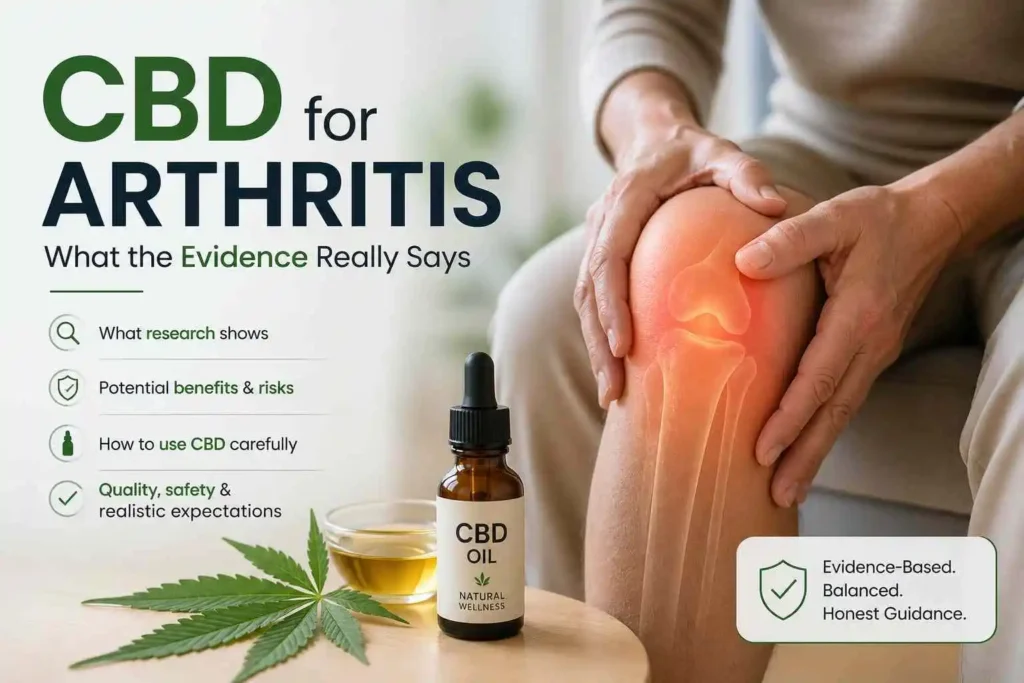
Arthritis pain pushes people into a frustrating corner fast. Joints stay stiff, sleep gets worse, stairs become annoying, and the usual advice often feels incomplete. That is why so many people start looking at CBD. The problem is that the internet treats CBD like either a miracle or a scam, while the truth is more complicated. CBDOils.pk fits into that gap by helping people sort out what the evidence actually supports, what the risks are, and how product quality changes the whole conversation.
Quick Answer
CBD might help some people with arthritis-related pain or sleep, but it is not backed by strong enough human evidence to call it a proven arthritis treatment. The Arthritis Foundation says animal studies and some small human studies suggest pain-relieving and anti-inflammatory properties, but these effects still need confirmation in larger, higher-quality human studies. It also notes that real-world experiences are mixed: some people report relief, while others do not.
That is the honest answer. Not “yes.” Not “no.” Promising, but unproven is the right phrase.
Why Arthritis Patients Keep Looking at CBD
This keyword is not really about curiosity. It is about pain, stiffness, poor sleep, and the fear of adding one more disappointing product to the pile. Public guidance from NCCIH notes that chronic pain becomes more common with age and that osteoarthritis is one of the conditions that contributes to that burden. So it makes sense that people with arthritis keep searching for alternatives or add-ons when standard approaches are not enough.
In practical terms, this is the person in Lahore whose knees hurt after a long day on stairs, or the person in Islamabad whose hands feel worst in the morning cold. They are not looking for a lecture on cannabinoids. They want to know whether CBD is worth trying without getting played by marketing.
What the Research Actually Shows
The strongest claim you can make without drifting into nonsense is this: preclinical evidence looks more encouraging than the human evidence. A 2022 review on CBD as a treatment for arthritis and joint pain says CBD has shown promise in preclinical studies for reducing inflammation and pain, but it also makes clear that better clinical evidence is still needed.
Recent human data are not strong enough to justify miracle language. A 2025 clinical trial in knee osteoarthritis found that a CBD-rich cannabis oil did not significantly improve pain compared with placebo over two months, although it was generally well tolerated. That matters because too many CBD articles keep citing animal work while ignoring newer human trials that are less flattering.
A broader 2024 review of clinical trials on CBD for pain was even harsher: it reported that 15 of 16 randomized controlled trials were negative, with no greater pain-relieving effect for CBD than placebo in most studies reviewed. That does not mean CBD never helps anyone. It means the evidence base is weaker than the marketing suggests.
Can CBD Help Arthritis Pain or Stiffness?
Osteoarthritis
This is the biggest real-world target behind the keyword. The problem is that good evidence is still thin. The 2025 knee osteoarthritis trial mentioned above did not find significant pain improvement over placebo, which is exactly the kind of result marketers prefer you never read.
Hand and joint pain
There are some early signals, but they are not decisive. A 2024 open-label feasibility trial of transdermal CBD gel for symptomatic hand osteoarthritis reflects growing interest in this area, but open-label feasibility data are not the same thing as strong proof. Useful? Maybe. Settled? Not even close.
Sleep and day-to-day comfort
This is where some users may feel benefit even when the arthritis-specific evidence is weak. The Arthritis Foundation notes that some arthritis patients report not just pain relief, but also sleep improvement and reduced anxiety. That does not prove CBD treats arthritis itself. It suggests some people may experience symptom-level benefits that matter to daily life.
Benefits of CBD Oil, but the article should be careful not to imply those benefits are guaranteed for arthritis.
Is CBD an Anti-Inflammatory for Arthritis?
CBD is often described as having anti-inflammatory potential, and that language is not coming out of nowhere. Reviews describe CBD as affecting inflammatory signaling and immune pathways, which is why it keeps appearing in pain and arthritis discussions. But the cleaner conclusion is that this mechanistic promise has not yet translated into strong, consistent human proof for arthritis treatment.
Is CBD an Anti-Inflammatory?. The answer there and here should stay consistent: promising biology, limited clinical certainty.
What Type of CBD Product Makes More Sense?
There is no universally “best” format for arthritis. Oils, capsules, gummies, and topicals all get used, but they solve different problems. Topicals may make more sense when someone wants to target one area, while oils are often chosen by people looking for a broader route of use. Healthline-style consumer guidance and arthritis guidance both reflect this practical split, even though the evidence for superiority is not settled.
The mistake is assuming one product category wins automatically. It depends on the joint problem, the person’s routine, and how realistically they are approaching CBD in the first place.
How to Use CBD More Carefully
The Arthritis Foundation’s expert-informed guidance for adults with arthritis says there are no established clinical guidelines for CBD use in arthritis and recommends a cautious approach. Their practical advice starts low and increases slowly rather than jumping straight into aggressive dosing.
That cautious approach matters because arthritis patients are often older, more likely to take multiple medications, and more likely to get hurt by sloppy supplement advice. How to Use CBD Oil.
Side Effects, Drug Interactions, and Who Should Be Careful
Even if CBD helps some people, it is not risk-free. The FDA says CBD can interact with medications and may increase or decrease the effects of other drugs. It also points to risks such as liver injury, drowsiness, diarrhea, and changes in mood or alertness, and it advises against CBD use during pregnancy or breastfeeding.
That matters more in arthritis than many people realize. Someone with arthritis may also be taking pain medications, sleep medications, blood thinners, or other long-term prescriptions. So “it’s natural” is not a serious safety argument. CBD Oil Side Effects.
How to Spot a Better CBD Product
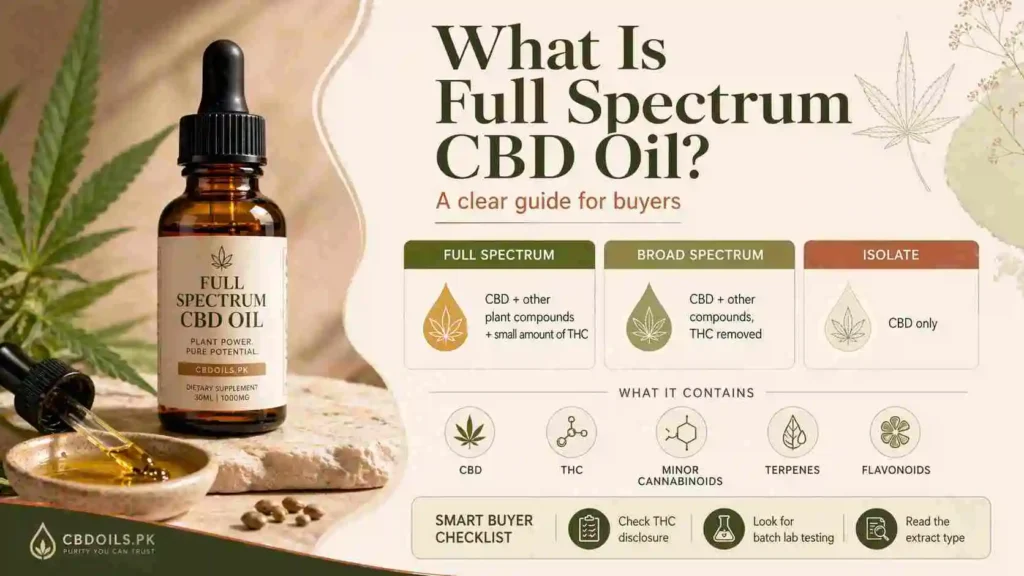
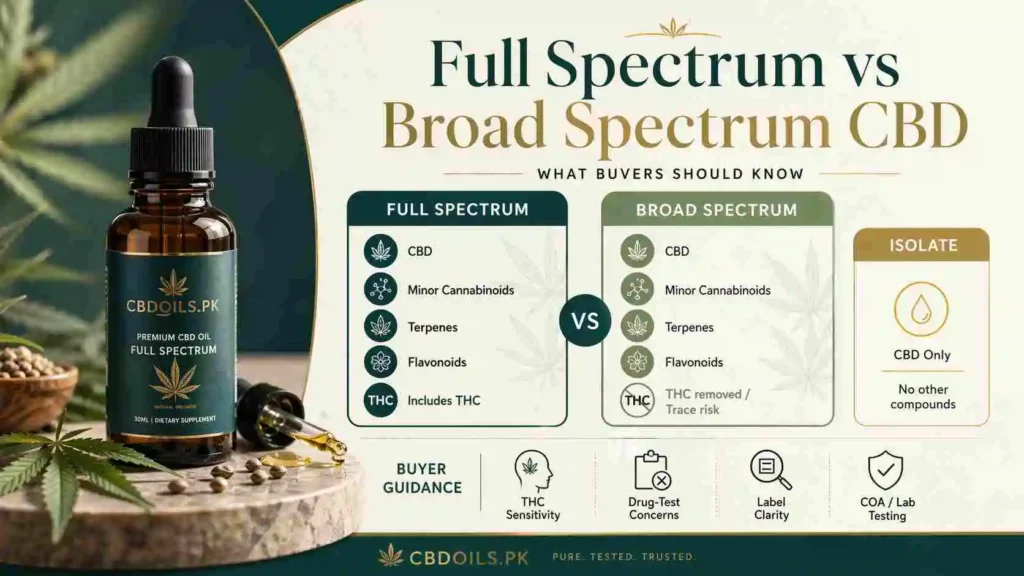
If someone still wants to try CBD for arthritis, the smart move is not chasing the boldest claim on the label. It is checking:
- whether the product clearly states CBD amount
- whether it contains THC
- whether there is a current third-party Certificate of Analysis
- whether the brand avoids cure-style promises
- whether the format matches the user’s actual goal
The FDA says many CBD products are marketed with unproven medical claims, and a 2024 clinical review noted that CBD products can contain far different amounts of CBD than advertised and may include other chemicals. That is not a small quality issue. It is the whole buying decision.
That is where CBDOils.pk should win trust: not by pretending CBD is guaranteed to fix arthritis, but by being clearer about quality, testing, and realistic use than the average seller.
Final Takeaway
CBD may be worth exploring for some people with arthritis, especially if the goal is to see whether it helps with pain, stiffness, or sleep. But the current evidence does not justify calling it a proven arthritis treatment. The best summary is still: some promise, mixed real-world results, limited strong human evidence.