A lot of confusion around CBD in Pakistan starts with one basic problem: people hear the word “cannabis” and assume hemp, marijuana, CBD, and THC all mean the same thing. That confusion creates real friction for cautious buyers, first-time users, and anyone trying to avoid intoxication, legal uncertainty, or low-quality products. CBD Pakistan helps readers cut through that noise by explaining what hemp actually is, how it differs from cannabis in everyday use, and where hemp-derived CBD fits before anyone relies on labels, sellers, or market gossip.
What is hemp?
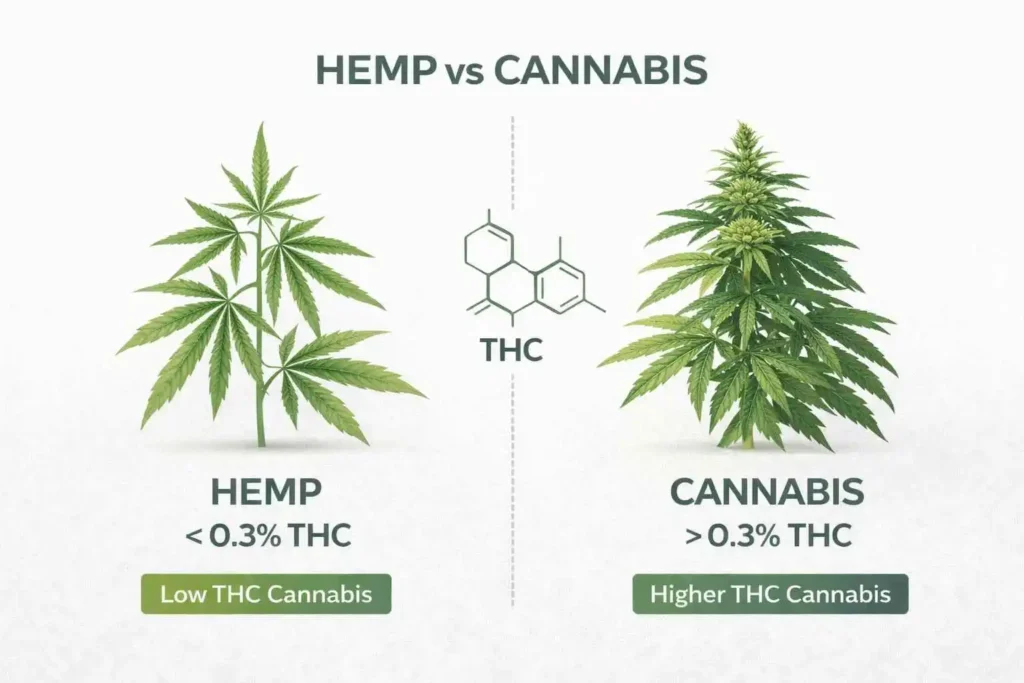
Hemp is a type of cannabis plant that is generally defined by its low THC content. Reputable health and regulatory sources commonly describe hemp as cannabis containing 0.3% THC or less by dry weight. That threshold is what separates hemp from higher-THC cannabis in many regulatory frameworks.
Here’s the thing: hemp is not some totally different plant family. It comes from the same broader cannabis category. The difference is mainly about chemical profile, especially how much THC it contains.
Is hemp the same thing as cannabis?
Technically, hemp is part of the cannabis family, but in practical use people usually separate the terms because they are talking about different THC levels, different product types, and different effects. Healthline puts it simply: both hemp and cannabis plants are the same species, but the main difference lies in how much of a specific cannabinoid each contains.
That is why saying “hemp and cannabis are the same” is incomplete, and saying “hemp has nothing to do with cannabis” is also wrong. Both are lazy summaries.
Hemp vs cannabis: the main difference
THC content
The biggest difference is THC. THC is the compound most associated with the intoxicating “high” people link to marijuana. Hemp usually contains 0.3% THC or less, while higher-THC cannabis contains more than 0.3% THC.
That single difference changes a lot:
- how the plant is classified
- how it is regulated
- whether it is likely to cause intoxication
- what kind of products are typically made from it
Typical use and product type
Hemp is commonly discussed in relation to fiber, textiles, seed oil, hemp-derived CBD, and low-THC wellness products, while higher-THC cannabis is more closely associated with intoxicating use and certain medical or adult-use frameworks depending on the country. Harvard Health notes that hemp has long been used for things like fabrics and rope, while cannabis products with higher THC are treated differently because of their psychoactive potential.
CBD vs THC
This is where many beginners get lost. CBD and THC are both cannabinoids found in cannabis plants, but they do not behave the same way. NCCIH states that THC is the compound responsible for cannabis’s intoxicating effects, while CBD is a different cannabinoid with a different effect profile.
For readers who want the compound difference explained directly, this is a natural place to link once to CBD vs THC.
Does hemp get you high?
In normal discussion, hemp is not expected to cause the classic cannabis high because its THC content is very low. Health Harvard and other reputable sources describe hemp as cannabis with 0.3% THC or less, which is below the level commonly associated with intoxicating effects in marijuana-type products.
That does not mean every product marketed with the word “hemp” is automatically perfect or identical. Product quality, labeling, and testing still matter. FDA continues to warn that there are unresolved questions about the safety, quality, and labeling of CBD and cannabis-derived products.
Where CBD oil fits into the picture
CBD oil is often made from hemp-derived CBD, which is one reason people keep hearing hemp, cannabis, and CBD in the same conversation. But they are not interchangeable terms.
A simpler way to think about it:
- Hemp = the low-THC cannabis source
- CBD = one cannabinoid found in cannabis plants
- CBD oil = a finished product that may use hemp-derived CBD
- THC = the cannabinoid most associated with intoxication. What Is CBD Oil in Pakistan.
Common mistakes people make about hemp and cannabis
Mistake 1: Thinking hemp is not cannabis at all
It is part of the cannabis family. The key distinction is its low THC level, not total separation from cannabis as a plant category.
Mistake 2: Thinking hemp and marijuana are identical in effect
They are not treated the same in practice because THC content changes the effect profile and regulatory treatment.
Mistake 3: Thinking CBD and hemp mean the same thing
CBD is a compound. Hemp is a plant classification based largely on THC threshold. Those are related terms, not identical ones.
Mistake 4: Thinking any product labeled “hemp” is automatically trustworthy
That is where people get burned. FDA says there are still major questions around product quality and labeling for CBD and cannabis-derived products, which is why transparency and testing matter.
For readers who need the broader comparison, Hemp vs Cannabis vs CBD.
Final takeaway
Hemp is a type of cannabis plant defined mainly by its low THC content, usually 0.3% or less by dry weight. Higher-THC cannabis sits on the other side of that line and is more closely associated with intoxication. CBD often comes from hemp, but CBD, hemp, cannabis, and THC are not the same thing. That distinction matters for buyers because it affects how products are understood, how they are marketed, and what people should actually expect from them.