Homemade CBD oil sounds simple until you hit the parts that actually matter: strength, ingredient quality, and whether the final bottle is even worth using. That is where people get stuck. They want a cleaner, more affordable way to make CBD oil at home, but most recipes skip the hard questions around potency, testing, and product safety. CBDOils.pk helps close that gap by focusing on clearer education, better product quality, and practical guidance that makes DIY decisions less sloppy from the start.
Quick Answer
The safest beginner-friendly way to make CBD oil at home is not amateur solvent extraction. It is a simple carrier-oil infusion or blend using a legally obtained, lab-tested CBD ingredient such as CBD isolate or a tested hemp-derived extract. Healthline’s DIY guide describes a coconut-oil method and notes that if you use hemp flower, it needs to be decarboxylated first so CBDA converts to CBD. At the same time, the FDA says there are still major unanswered questions about CBD product quality and labeling, which is exactly why the ingredient you start with matters more than any trendy recipe.
The Safest Way to Make CBD Oil at Home
Here’s the thing: there is a big difference between making a simple CBD oil blend and trying to extract cannabinoids from plant material with risky methods. The safer home route is to use a tested CBD ingredient and mix it into a food-grade carrier oil such as MCT oil, olive oil, or coconut oil. That gives you a cleaner process, easier potency control, and fewer chances to ruin the batch or expose yourself to bad chemistry. Healthline’s DIY guide focuses on an oil-based method rather than dangerous extraction, and FDA materials emphasize that COAs are used to communicate product quality, cannabinoid content, and THC levels.
That is the version worth publishing. Anything else starts drifting into backyard manufacturing fantasy.
What You Need Before You Start
For a simple homemade CBD oil, you need:
- a carrier oil such as MCT oil, olive oil, or coconut oil
- a tested CBD ingredient such as CBD isolate or a clearly labeled hemp-derived extract
- a heat-safe bowl or double boiler
- a clean glass bottle or jar
- a small whisk, spoon, or stirrer
- a way to measure your CBD amount accurately
If you are using hemp flower instead of isolate or extract, Healthline notes that the hemp needs to be decarboxylated first so the acidic form converts into CBD. But the more practical beginner route is still isolate or a tested extract because the math is cleaner and the quality is easier to verify.
What Is CBD Oil in Pakistan? and How to Choose High-Quality CBD Oil.
Step-by-Step: How to Make CBD Oil
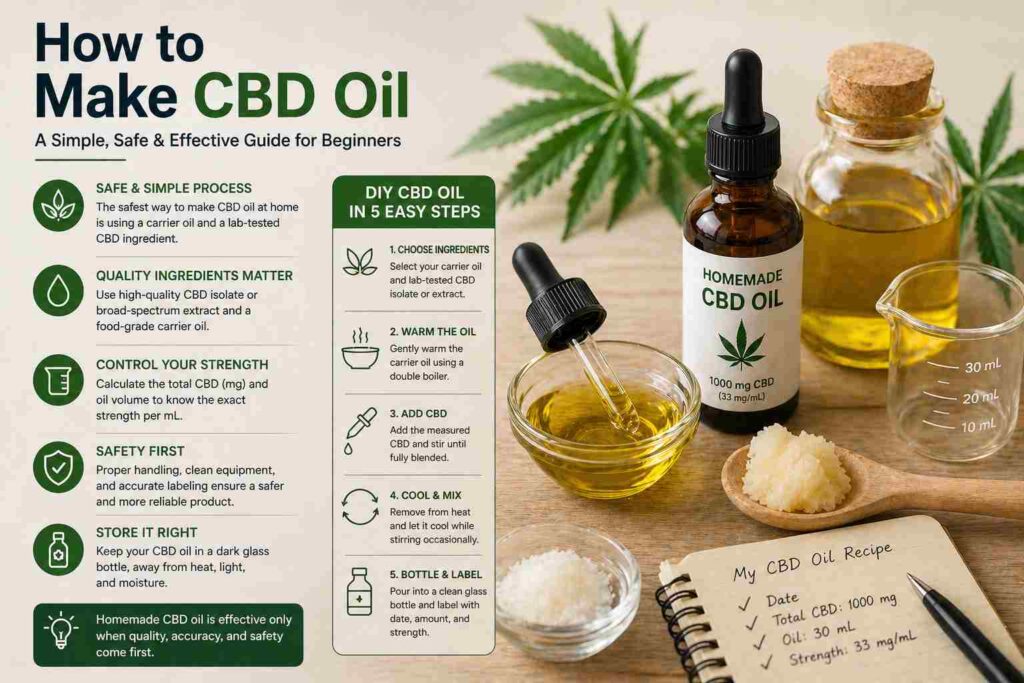
1. Choose your carrier oil
Pick a food-grade carrier oil that fits your use. MCT oil is popular because it stays light and easy to measure. Olive oil is common and simple. Coconut oil works too, though it may firm up depending on room temperature. Healthline’s DIY guide specifically uses coconut oil in its home method.
2. Warm the oil gently
Put the carrier oil into a double boiler or heat-safe bowl over low heat. You do not need aggressive heat. You just want the oil warm enough to help the CBD blend evenly.
3. Add the CBD ingredient
If you are using CBD isolate, add the measured amount into the warm oil and stir until it dissolves evenly. If you are using a tested hemp extract, add the measured amount and mix thoroughly. The goal is even distribution, not random guessing.
4. Stir and cool
Keep stirring until the mixture looks uniform, then remove it from the heat and let it cool slightly.
5. Bottle and label it
Pour the oil into a clean glass bottle or jar. Then label it with:
- the date
- the total CBD used
- the total oil volume
- the approximate mg of CBD per mL
That last point matters more than people think. A bottle without potency info is just a mystery liquid with branding.
If you are making CBD oil from hemp flower instead of isolate or extract, Healthline notes that the flower should be decarboxylated first, then combined with the oil for infusion.
How to Calculate CBD Strength
This is the part that separates a useful DIY batch from nonsense.
The basic formula is:
Total mg of CBD ÷ total mL of oil = mg of CBD per mL
Example:
- if you add 1000 mg CBD
- into 30 mL carrier oil
- your finished oil is about 33 mg/mL
That is the number that matters, not “one dropper” by itself. Dropper size varies. Bottle size varies. Labels lie more often than they should. FDA materials describe COAs as a tool for communicating potency and THC thresholds, which is why reliable input data matters before you do any DIY potency math.
Can You Make CBD Oil From Hemp Flower?
Yes, but that route is messier and easier to get wrong. Healthline says that if you use hemp flower, it needs to be decarboxylated first so CBDA converts into CBD, and then it can be infused into a carrier oil. That is a workable home method, but it gives you less precision than starting with a measured, tested CBD ingredient.
That is the truth most DIY articles dodge. Using flower sounds more “natural,” but it usually gives you worse potency control, more variability, and more room for low-quality raw material to ruin the batch.
Common DIY CBD Oil Mistakes
Using untested CBD
If the starting ingredient is weak or mislabeled, the finished oil is weak or mislabeled. Nothing clever happens in the mixing bowl to fix that. The FDA says quality and labeling questions around CBD products remain unresolved.
Not calculating potency
This is the classic beginner mistake. People blend something together, pour it into a nice bottle, and have no idea how much CBD is in each mL.
Using too much heat
Too much heat can damage the texture, taste, and consistency of the oil. Slow and gentle is the right move.
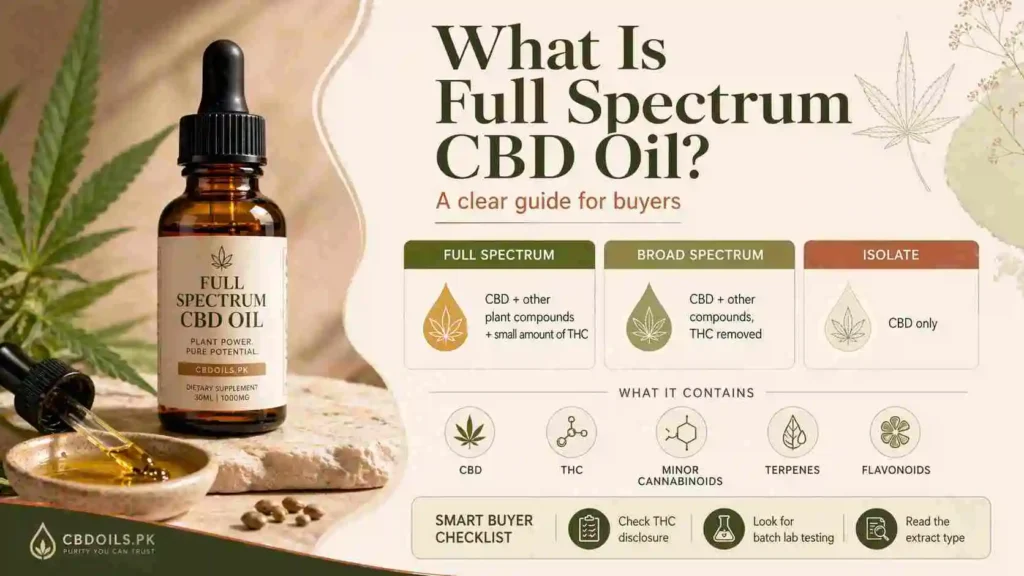
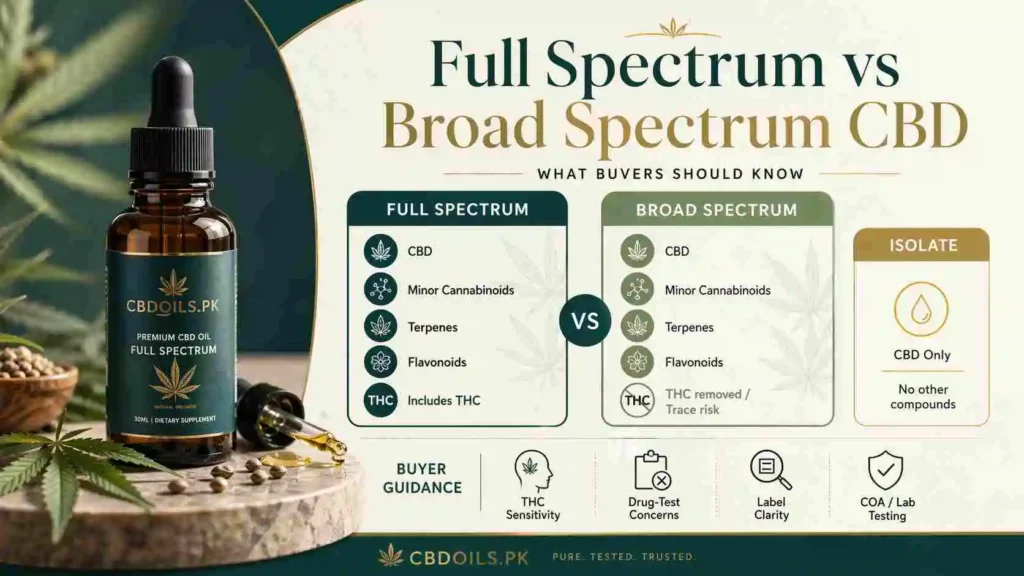
Confusing full-spectrum, broad-spectrum, and isolate
These are not the same. NCCIH also notes that when THC and CBD are consumed together orally, CBD may inhibit THC metabolism and increase THC-related effects, which is one more reason to know exactly what kind of extract you are using.
Treating a DIY oil like a proven medical product
NCCIH says CBD can cause side effects and interact with other drugs, and the FDA says there are still many unanswered questions about safety and quality. Homemade oil is not automatically safer just because you made it yourself.
How to Store Homemade CBD Oil
Store homemade CBD oil in a clean, airtight glass bottle away from direct light, heat, and moisture. Business Insider’s beginner guide on cannabis oil storage recommends a cool, dark place and notes that glass helps preserve the oil better than more reactive containers. Properly stored oil may last for months, but shelf life depends on the carrier oil and how cleanly the batch was made.
In Pakistan’s hotter months, this matters more. A bottle left in a warm kitchen in Karachi or Lahore is going to degrade faster than one stored carefully in a cool cupboard.
Why CBD Quality Matters More Than the Recipe
This is the core of the whole article.
A decent recipe cannot rescue a bad CBD ingredient. The FDA says there are still major questions about the science, safety, and quality of CBD products, and FDA planning documents specifically note that COAs are used to communicate potency, THC thresholds, and testing for contaminants like pesticides, residual solvents, toxic elements, and microbes.
That means the real DIY checklist is not:
“Do I have coconut oil and a jar?”
It is:
“Do I know what this CBD ingredient actually contains, how strong it is, and whether it was tested properly?”
Third-Party Lab Testing CBD and How CBD Oil Works in the Body.
At CBDOils.pk, the stronger brand position is not pushing homemade oil as a magic shortcut. It is helping people understand that tested CBD quality matters more than a pretty DIY method.
Final Takeaway
You can make CBD oil at home, but the safer beginner route is a simple blend or infusion using a carrier oil and a tested CBD ingredient, not risky extraction methods. Healthline’s DIY guide supports a gentle oil-based process, while FDA and NCCIH sources make it clear that quality, labeling, side effects, and drug interactions are real issues in the CBD space.