CBD extraction sounds straightforward until the real questions show up: which method actually pulls cannabidiol from hemp, which ones are safer, and what separates a clean extract from a weak or contaminated one. That confusion matters because many readers want to understand the process without getting lost in lab jargon or ending up with reckless DIY advice. CBDOils.pk can support that decision by focusing on clearer education, quality-first thinking, and practical guidance that helps people judge CBD products more intelligently instead of chasing half-baked extraction hacks.
Quick Answer
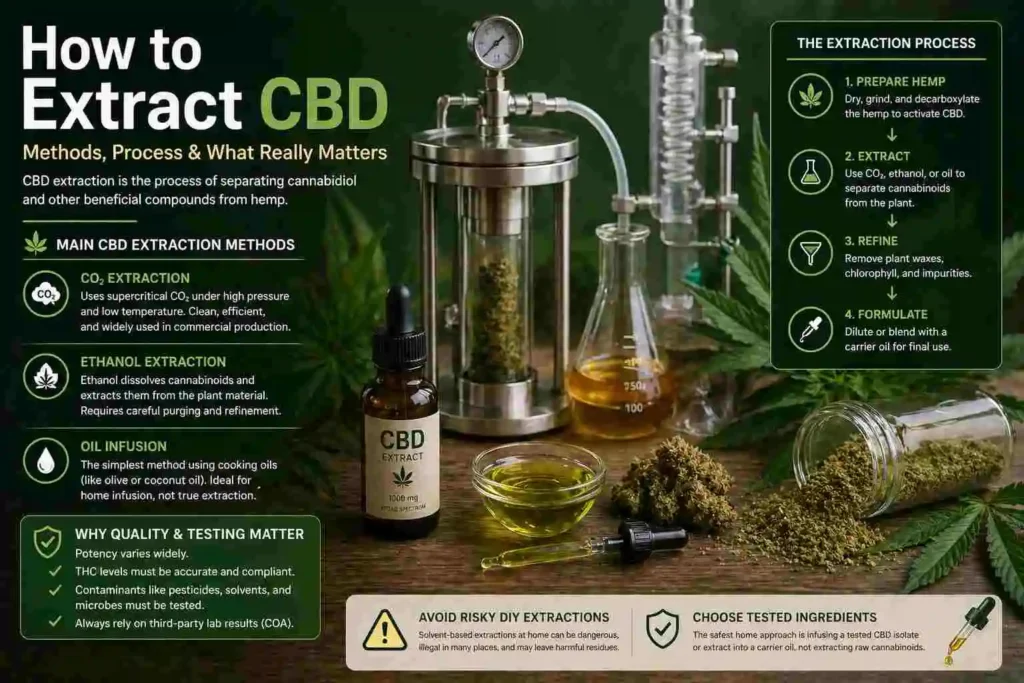
CBD is usually extracted from hemp with CO2, ethanol, or oil-based methods, depending on the scale and the goal of the final product. Project CBD describes supercritical CO2, ethanol, hydrocarbons, and cooking oils as common ways to separate cannabinoids from plant material, while a 2021 scientific review explains that commercial cannabis extraction commonly relies on solvent-based or supercritical-fluid methods followed by refinement steps. For home users, the safer conversation is not “how do I build an extraction system,” but “how do I avoid unsafe methods and use a tested CBD ingredient instead.”
What “CBD Extraction” Actually Means
CBD extraction is the process of separating cannabidiol and other target compounds from hemp biomass so they can be concentrated into an oil or refined ingredient. Project CBD explains that cannabinoids are oily compounds that can be dissolved and pulled out of plant material using suitable solvents, and the 2021 review on cannabis processing notes that extraction is usually only one stage in a larger workflow that can also include drying, winterization, decarboxylation, filtration, and formulation.
That distinction matters because people often mix up extraction, refinement, and final product making as if they are the same job. They are not. Pulling compounds out of hemp is one step. Turning that extract into something clean, stable, and accurately labeled is another.
The Main Ways CBD Is Extracted From Hemp
CO2 extraction
CO2 extraction is one of the most widely used commercial methods. Project CBD says supercritical CO2 extraction is the most prevalent commercial method and one of the safest ways to separate CBD and other cannabinoids from hemp biomass, largely because the process can be tuned with pressure and temperature and avoids the fire risk linked to combustible solvents. The same source notes that the resulting crude extract often goes through winterization and other purification steps afterward.
The upside is control and cleanliness. The downside is cost, complexity, and equipment. That is why this method belongs in professional setups, not in people’s kitchens.
Ethanol extraction
Ethanol is another major extraction route. Project CBD says ethanol has long been used to extract medicinal compounds from plants and is now a popular way to extract CBD oil. The 2021 processing review also treats ethanol as one of the standard extraction options in cannabis processing.
Ethanol can work well, but it is still a solvent method, which means purification, residual-solvent control, and processing discipline matter. This is exactly where content goes bad when it pretends “ethanol extraction” is just a casual home project instead of a controlled production method.
Oil infusion
Oil infusion is the simplest method in the group. Project CBD lists cooking oils such as olive oil among common extraction solvents, and Healthline’s DIY guide explains a home method using a carrier oil after decarboxylating hemp flower.
This is the only extraction-style method that really makes sense to discuss for ordinary home readers, but even here the problem is consistency. Oil infusion is easier to attempt, yet harder to standardize. If the raw material is weak or untested, the final oil is just a prettier version of the same problem.
Why Commercial Extraction Is Different From DIY Work
Industrial extraction is not just “a bigger version of a home recipe.” It uses specialized equipment, process controls, and refinement steps to separate cannabinoids, reduce unwanted compounds, and standardize the final extract. The 2021 review on cannabis processing describes extraction as part of a broader production chain that can include drying, refining, decarboxylation, distillation, and product formulation. FDA materials also emphasize the importance of Certificates of Analysis to communicate potency, THC thresholds, and contaminant testing.
That is the uncomfortable truth most DIY articles dodge. A professionally extracted CBD ingredient is not just about pulling compounds out of plant matter. It is about measuring what came out, checking what else came with it, and proving the result.
Can You Extract CBD at Home?
You can make a basic oil infusion at home, but home readers should not treat that as equivalent to professional extraction. Healthline’s DIY guide describes a coconut-oil approach for home use, but that is still a simple infusion-style process, not the kind of controlled extraction and purification used in commercial production.
Here’s the thing: the question “how to extract CBD” sounds clean, but home extraction gets messy fast. Once people start thinking in terms of solvents, concentration, or shortcuts, the process moves from educational to irresponsible. The smarter home answer is to avoid improvised extraction setups and work only with a legal, clearly labeled, tested CBD ingredient. How CBD Oil Is Made and How to Make CBD Oil.
The Safer Home Option: Infusing a Tested CBD Ingredient Into Oil
For ordinary users, the better route is not extracting raw cannabinoids from hemp flower at home. It is blending a tested CBD isolate or lab-verified hemp extract into a carrier oil such as MCT oil, olive oil, or coconut oil. That gives better control over strength and fewer surprises than trying to guess what came out of raw plant material. Healthline’s home method supports oil-based infusion as a practical DIY route, and FDA documents underscore why test data and cannabinoid labeling matter.
In real life, this matters even more in markets where buyers may rely on screenshots, reseller claims, or incomplete lab reports. A person in Lahore or Karachi can follow every recipe step perfectly and still end up with poor CBD oil if the starting ingredient was never tested properly. That is not a recipe issue. It is a sourcing issue.
Why Potency and Lab Testing Matter
Extraction quality without testing is just a confident guess. FDA planning materials explain that COAs are used to communicate cannabinoid potency, THC thresholds, and testing for contaminants such as pesticides, microbes, toxic elements, and residual solvents. A 2024 study on product labeling accuracy also found widespread problems with cannabinoid labeling and spectrum claims in commercial products.
That means the real question is not just “how do you extract CBD?” It is also:
- how much CBD ended up in the extract,
- whether THC is where the label says it is,
- and whether unwanted contaminants are still present.
Third-Party Lab Testing CBD and What Consumers Should Know About CBD Product Quality in Pakistan.
Common Extraction Mistakes
Treating extraction like a kitchen shortcut
Industrial extraction is a processing discipline, not a lifestyle trick. The 2021 scientific review makes clear that extraction and downstream refinement are technical steps with real process variables.
Ignoring potency math
A homemade oil without a meaningful mg-per-mL estimate is not a serious product. FDA materials make clear that potency communication is one of the core purposes of cannabinoid testing.
Using poor-quality starting material
A bad hemp input or mislabeled CBD ingredient does not become premium because it passed through oil. The 2024 labeling study found substantial product-label inaccuracies in the commercial market.
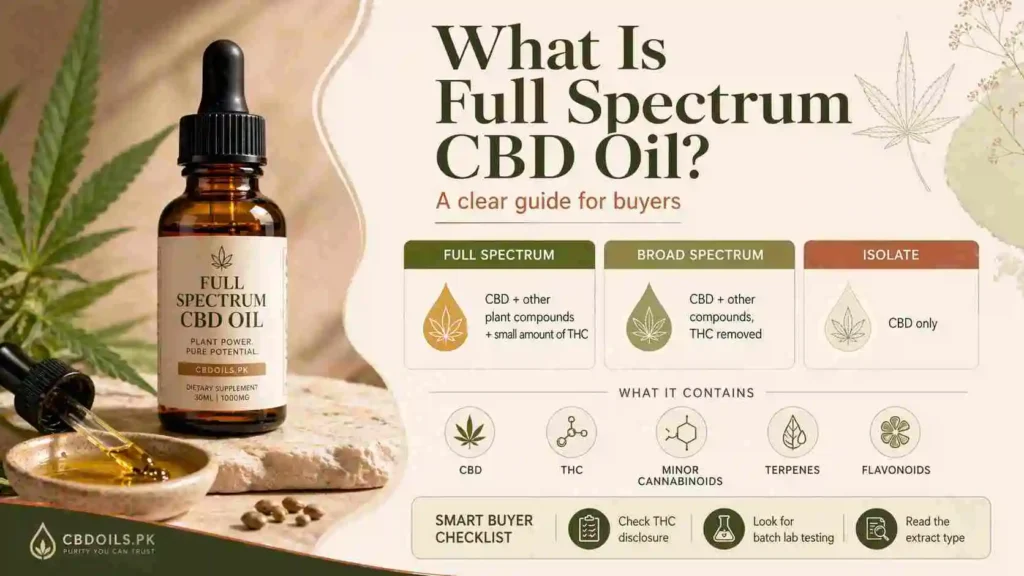
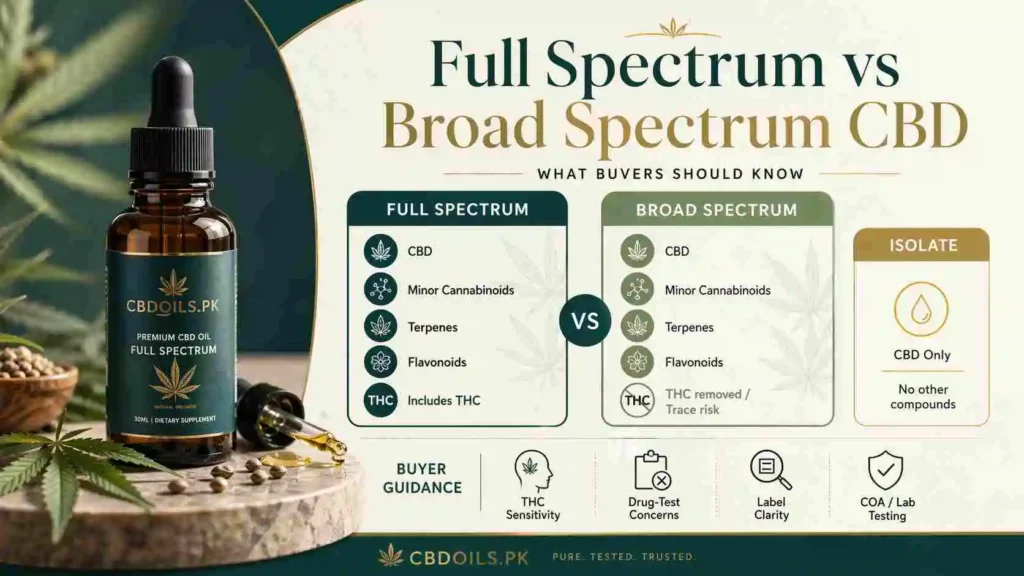
Confusing isolate, broad-spectrum, and full-spectrum
These are not interchangeable terms. The 2024 accuracy study specifically evaluated label claims including full spectrum, broad spectrum, and CBD isolate, showing why buyers should not assume those words are always used honestly.
Final Takeaway
CBD can be extracted from hemp through CO2, ethanol, or oil-based methods, but those methods do not belong in the same risk bucket. CO2 and ethanol are professional-scale extraction approaches tied to controlled equipment and refinement steps, while oil infusion is the only realistic home-scale method worth discussing for ordinary readers.