
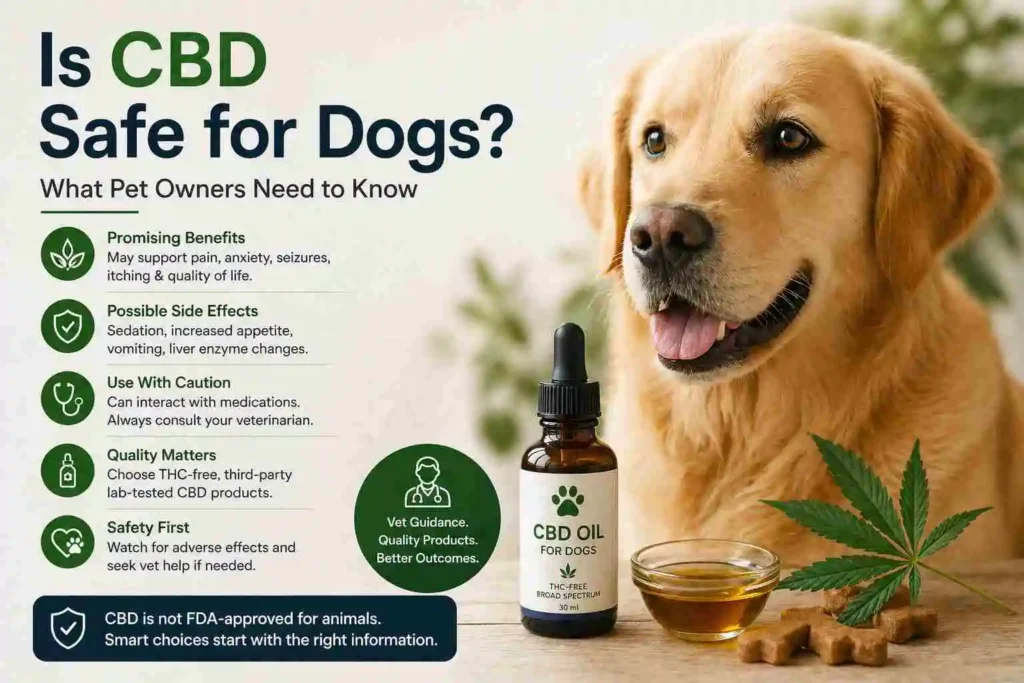
Pet owners usually do not look into CBD for dogs out of curiosity. They look because their dog is in pain, slowing down, getting anxious, or dealing with seizures, and they are trying to find something that might help without making things worse. That is exactly where the confusion starts: the market talks like CBD is simple, while the real issues are safety, dosing, drug interactions, and weak product quality. CBDOils.pk helps close that gap by focusing on clearer education, cleaner sourcing, and the kind of product guidance that makes owners think before they dose.
Quick Answer
CBD may be tolerated by some dogs, and early veterinary research suggests there may be a role for certain hemp-derived products in areas like osteoarthritis, itching, and seizures. But the clean answer is not “yes, it’s safe” across the board. The FDA says it has not approved cannabis for any use in animals and cannot ensure the safety or effectiveness of these products, while Cornell’s veterinary guidance says dog owners should talk to a veterinarian first because CBD can affect liver enzymes and interact with other medications.
Why Dog Owners Keep Asking About CBD
The reason is obvious: people want alternatives when their dog is stiff, older, anxious, or still having seizures despite treatment. Cornell says the available literature suggests there may be a place for hemp products in the treatment of canine osteoarthritis, atopic dermatitis, and seizures, and AKC coverage notes that owners commonly turn to CBD for pain, seizures, quality of life, and anxiety-related concerns.
That does not mean every CBD product marketed for dogs is safe or useful. It means there is enough early signal to attract attention, but not enough certainty to hand-wave the risks.
What the Research Says So Far
The research is promising in spots, but still limited. Cornell reports that in one early osteoarthritis study, more than 80% of dogs showed decreased pain and became more comfortable and active. The AKC Canine Health Foundation also highlights a double-blind epilepsy study where dogs on CBD had fewer seizure days than on placebo, though liver enzyme changes were noted and more safety work is still needed.
That is the honest framing: possible benefit, incomplete safety picture. Anyone presenting CBD for dogs as settled science is overstating the evidence.
Possible Side Effects of CBD in Dogs
Cornell says the most common owner-reported side effects were sedation and increased appetite. It also warns that CBD can affect liver enzymes, including pathways involved in metabolizing many medications, which raises the risk of drug interactions. In the AKC Canine Health Foundation epilepsy study, mild side effects included vomiting and decreased appetite, and some dogs had increased liver enzymes, especially ALT.
The FDA’s broader pet guidance is even blunter about adverse effects from cannabis ingestion in animals: signs can include lethargy, depression, heavy drooling, vomiting, agitation, tremors, and convulsions. That is one reason pet owners should stop treating CBD like it is automatically harmless because it is “natural.”CBD Oil Side Effects.
When CBD for Dogs May Be Riskier
Risk goes up when the product is poorly labeled, contains THC, or is given alongside other medications without veterinary input. Cornell specifically warns that CBD may change how other medications perform because of effects on liver enzymes. The FDA also states that it cannot ensure the safety or effectiveness of cannabis products marketed for pets and recommends pet owners talk with their veterinarian about appropriate treatment options.
That matters in real life. A dog owner in Lahore may buy a “hemp pet oil” online, assume it is gentle, and never realize the product could contain THC or inconsistent cannabinoid levels. That is not a minor labeling problem. It is the whole safety issue. AKC notes that label accuracy in CBD products for animals has been a serious concern, citing studies that found inaccurate cannabinoid labeling.
Can CBD Kill a Dog?
CBD itself is not usually framed as highly lethal at typical exposure levels, but that is the wrong standard. The real danger is accidental ingestion of THC-containing products, edibles, mislabeled items, or products with unsafe additives. AKC says dogs can show symptoms from ingestible CBD products between one and three hours after ingestion, sometimes as late as 12 hours, and reports that up to 45% of CBD exposures reported to Pet Poison Helpline required veterinary intervention.
So the smarter answer is: do not assume a dog will be fine just because the package says CBD. If a dog ate an edible, a human gummy, or a product that may contain THC, immediate veterinary contact matters. The FDA says to consult your veterinarian, a local animal emergency hospital, or an animal poison control center right away if you suspect adverse effects from cannabis ingestion. Can CBD Kill a Dog?.
How Much CBD for Dogs Is Too Much?
This is where weak content gets reckless. There is no universally established consumer-safe dosing rule for dogs across all CBD products. The FDA says it has not approved cannabis for animal use and cannot ensure proper dosage, while AKC Canine Health Foundation notes follow-up work is still underway to determine optimal CBD dosing in dogs.
That means owners should not copy a random internet chart and call it responsible. Dose depends on the product, the dog’s size, the condition being targeted, and whether other medications are involved. How Much CBD for Dogs.
What to Look for in a CBD Product for Dogs
This part matters more than the marketing copy on the bottle.
Before considering any CBD product for a dog, check:
- whether the product clearly states cannabinoid content
- whether it contains THC
- whether there is a current third-party Certificate of Analysis
- whether the label is made for pets, not humans
- whether the brand avoids cure-style claims
- whether a veterinarian is comfortable reviewing it
AKC says the CBD label is not always honest and notes that inaccurate cannabinoid labeling has been documented in animal-intended CBD oils. The FDA also says it cannot ensure the safety or effectiveness of cannabis products marketed for pets. /faqs/.
When to Call a Vet Right Away
Do not sit on symptoms and “wait to see” if a dog seems unwell after CBD or a cannabis product. FDA says to seek veterinary help immediately if you suspect adverse effects, and lists warning signs such as lethargy, depression, heavy drooling, vomiting, agitation, tremors, and convulsions. AKC also notes delayed symptom onset can happen after ingestion, especially with edibles.
That matters because owners often misread sedation as the product “working,” when in some cases it may be the start of a bad reaction or THC exposure. That kind of guessing is exactly how dogs get sicker before anyone acts.
Final Takeaway
CBD may be tolerated by some dogs, and early veterinary studies suggest it may help in certain cases such as osteoarthritis pain or seizure management. But the evidence is still limited, the dosage picture is not settled, liver enzyme changes and side effects have been observed, and the FDA has not approved cannabis for use in animals or confirmed these products as safe and effective.