
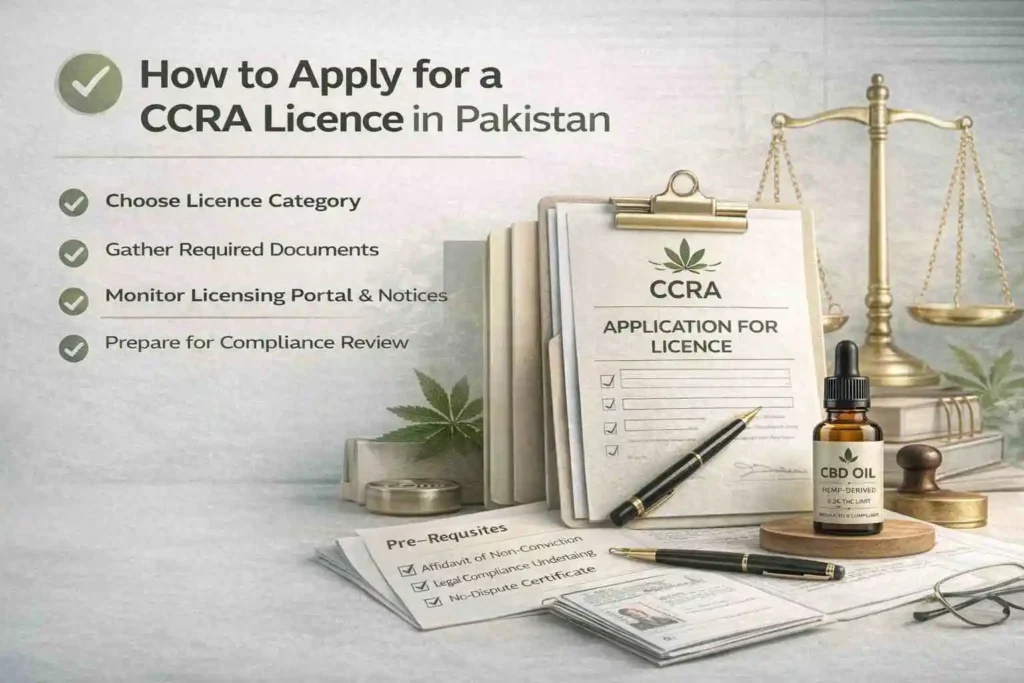
Applying for a CCRA licence in Pakistan is not as straightforward as many people assume. A lot of new entrants hear about licensing and think the process is already simple, fully active, and easy to follow, but the reality is far more procedural. CBD Pakistan helps readers understand what the application path actually looks like, what the current portal status means, and which documents matter before time is wasted on the wrong expectations.
What is a CCRA licence in Pakistan?
A CCRA licence is the formal authorization tied to Pakistan’s Cannabis Control & Regulatory Authority for regulated cannabis-related activity. CCRA’s public mandate says it regulates the cultivation of cannabis, extraction, refining, manufacturing, and sale of derivatives for medicinal and industrial purposes, which is why licensing matters across more than just farming.
Who needs a CCRA licence?
Anyone seeking to operate lawfully in regulated cannabis-related activity in Pakistan should treat licensing as central, especially in medicinal cannabis, industrial hemp, and synthetic / bio-synthetic categories. CCRA’s licensing portal page explicitly refers to licensing for those areas, which means this is not a one-size-fits-all permit.
In practical terms, licensing is relevant for businesses involved in:
- cultivation
- manufacturing
- CBD-related downstream activity
- research and development
- laboratory testing.
What licence types are available under CCRA?
CCRA’s public licence list shows multiple categories. The visible licence codes include:
- A-1: Industrial Hemp Cultivation
- A-2: Medicinal Cannabis Cultivation (Controlled)
- A-3: Medicinal Cannabis Cultivation (Open Field)
- B-1 and onward in the B category, with search results confirming at least broader manufacturing-related categories exist
- C-category licences as part of the overall framework.
The search snippet for the licence page makes one thing clear: there are multiple licence categories, and all types of licences will be issued after approval of the regulations, shortly. That means the first step is choosing the right category, not rushing to file the wrong application.
For readers who need the category breakdown first, add one natural internal link here to Types of Licences Under CCRA.
CCRA eligibility and prerequisites before you apply
CCRA has already published a Pre-Requisite for Applying Licenses page. The public search result confirms several load-bearing requirements.
Who can apply
According to CCRA’s published prerequisite snippet, the applicant must:
- be a Pakistani citizen, or
- be an entity incorporated in Pakistan under the relevant laws.
That means casual operators, informal partnerships, and “we’ll figure out the paperwork later” setups are already on weak ground.
Documents and declarations you may need
The visible prerequisite snippet shows that applicants may need:
- Certificate of Incorporation or relevant legal identity documents
- other supporting papers tied to legal standing and compliance.
CCRA’s prerequisites page is the right place to check before filing anything. The mistake most people make is assuming the portal is the first step. It is not. The first step is proving you are even eligible.
Step-by-step: how to apply for a CCRA licence in Pakistan
Step 1: Choose the right licence category
Start by matching your activity to the correct licence type. Are you cultivating industrial hemp, growing medicinal cannabis, manufacturing, researching, or working in testing? CCRA’s public licence structure shows that the framework is segmented by activity, not treated as one generic cannabis licence.
Step 2: Confirm your eligibility
Before anything else, confirm whether you qualify as a Pakistani citizen or a Pakistan-incorporated entity under the relevant laws. If you cannot satisfy the published eligibility rule, the rest of the application discussion is meaningless.
Step 3: Prepare the required documents
Use the Pre-Requisite for Applying Licenses page as your baseline checklist. At minimum, the public snippet shows corporate/legal identity documentation matters, including incorporation-related paperwork where applicable.
A serious applicant should already have:
- valid legal identity or incorporation documents
- clarity on ownership and structure
- internal records clean enough to support scrutiny
That last part is not fluff. In regulated sectors, messy paperwork kills momentum before regulators do.
Step 4: Check the licensing portal and notifications
This is where honesty matters. CCRA’s public portal page says “Licensing for Medicinal Cannabis, Industrial Hemp and Synthetic/ Bio …” and the homepage snippet says “Licensing Portal will be Available Shortly…” The licence page also says all types of licences will be issued after approval of the regulations, shortly.
So the smart move is to monitor:
- the Licensing Portal
- the Notifications section
- the Types of Licences page for rollout changes.
Step 5: Submit when the portal is live for your category
Once the relevant category is active, file against the correct licence type with the required supporting documents. Do not invent extra steps the authority has not published yet. That is how bad legal content gets written, and it is how businesses build false confidence.
Step 6: Prepare for review and compliance follow-up
Licensing is not just about clicking submit. CCRA’s mandate covers regulated activity across cultivation, extraction, refining, manufacturing, and derivatives, which means review and compliance follow-up are built into the logic of the system.
For readers who want the rules side next, add one natural internal link here to CCRA Compliance Requirements.
Is the CCRA licensing portal open right now?
Based on CCRA’s public pages, the portal is still presented as being in rollout mode, not as a fully mature, open-for-everything system. The homepage says “Licensing Portal will be Available Shortly…” and the licence page says all types of licences will be issued after approval of the regulations, shortly.
That means the honest answer is not “yes, just go apply right now.” The real answer is: watch the official portal and notifications closely, because the licensing system appears to be staged and regulation-dependent.
Common mistakes applicants should avoid
Let’s be blunt. Most mistakes here come from impatience and fantasy.
Avoid these:
- choosing a licence type before understanding what your business actually does
- assuming the portal is fully open because a web page exists
- ignoring the published prerequisites
- trying to enter the market without proper legal structure
- treating compliance as something to worry about after approval.
For the downside of getting this wrong, add one natural internal link here to CCRA Penalties in Pakistan.
Final takeaway
To apply for a CCRA licence in Pakistan, you need to choose the correct licence category, confirm you qualify as an eligible applicant, prepare the published prerequisite documents, and monitor the official portal and notifications for live rollout. CCRA’s public pages already confirm that licensing is structured by category, that applicant eligibility is limited to Pakistani citizens or Pakistan-incorporated entities, and that the system is still tied to regulatory approval and staged portal activation