
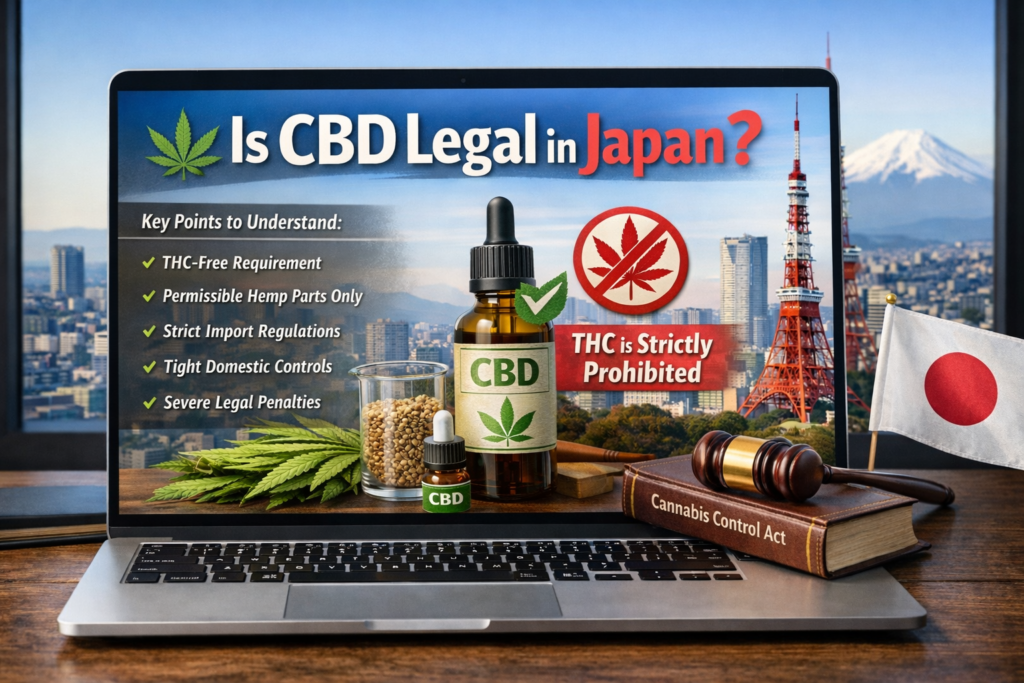
As the popularity of CBD (cannabidiol) continues to soar globally, individuals and businesses alike are keen to understand its legal status in various countries. While some nations have embraced CBD with open arms, others remain hesitant or even restrictive in their approach. Japan, known for its strict stance on cannabis-related substances, presents a unique legal environment for CBD. This article aims to dissect the current legal framework surrounding CBD in Japan, providing a clear understanding of the laws, regulations, and potential future developments for CBD in the Land of the Rising Sun.
What is CBD?
CBD, or cannabidiol, is one of over 100 active compounds found in the cannabis plant. Unlike THC (tetrahydrocannabinol), the psychoactive compound in cannabis, CBD is non-intoxicating, meaning it does not produce a “high.” It has gained recognition for its potential therapeutic benefits, such as reducing anxiety, alleviating pain, and improving sleep quality. While CBD is commonly derived from industrial hemp, it is also found in marijuana plants, leading to important distinctions in terms of legal status.
Global CBD Legislation Overview
CBD legislation varies widely across the globe, from complete legalization to strict prohibition. In Europe, the U.S., and parts of South America, CBD derived from hemp is generally legal, provided it contains less than 0.2-0.3% THC. However, Japan takes a more cautious approach, with cannabis-related substances being heavily regulated. Understanding Japan’s stance on CBD requires a thorough examination of both international cannabis laws and Japan’s strict history with drug regulation.
The Legal Landscape of Cannabis in Japan
Japan has a longstanding policy of zero tolerance toward cannabis. The Cannabis Control Law, enacted in 1948, criminalizes the possession, cultivation, and use of marijuana, with severe penalties for those caught violating it. Cannabis-related substances, including THC, are strictly prohibited, creating an environment where CBD’s legality remains a subject of debate and scrutiny. Despite the international trend towards cannabis decriminalization and legalization, Japan remains an outlier in maintaining stringent drug laws.
CBD vs. THC: Legal Implications
The key difference between CBD and THC lies in their psychoactive properties. THC is the compound responsible for the “high” typically associated with marijuana, whereas CBD is non-psychoactive. This distinction is crucial when discussing legal matters. In Japan, the government specifically prohibits THC in any form, while CBD’s legal status is more nuanced. Understanding this difference is essential for both consumers and businesses looking to navigate Japan’s cannabis laws.
Is CBD Derived from Hemp Legal in Japan?
CBD derived from hemp, which contains negligible amounts of THC (typically less than 0.3%), is often viewed more favorably in many jurisdictions. Japan, however, has clear regulations regarding the source of CBD. While hemp cultivation itself is permitted under strict regulations, the CBD extracted from hemp is subject to governmental scrutiny. As long as it contains no detectable THC, CBD derived from hemp is generally allowed for importation, but specific regulations apply to product types and their uses.
Japan’s Approach to CBD Imports
CBD products are legally permitted to be imported into Japan under certain conditions. However, the Japanese government exercises strict control over the type and quantity of CBD products that can be brought into the country. Importers must ensure that their products comply with local regulations, which often include documentation proving that the CBD content is below the permissible THC threshold. Despite these controls, the market for imported CBD products in Japan is small but growing.
CBD in Japan: What Does the Law Say?
The legal status of CBD in Japan is relatively complicated. CBD products that are free from THC (as determined by government testing) are typically allowed for use. However, this is conditional upon strict compliance with regulations surrounding product content and labelling. The Japanese Ministry of Health, Labour, and Welfare (MHLW) oversees the legal framework governing CBD, making it critical for consumers and businesses to stay updated on any legal changes.
Regulations on CBD Products in Japan
The Japanese government has established guidelines for CBD products sold in the country. These include stipulations on the purity of CBD, the type of product, and its intended use. While products like CBD oils and capsules may be permitted, edibles and certain forms of CBD may face more stringent restrictions. Importers and manufacturers must navigate these regulations to ensure compliance and avoid legal issues.
The Role of Japan’s Ministry of Health, Labour and Welfare
The Ministry of Health, Labour and Welfare plays a pivotal role in regulating CBD in Japan. The ministry ensures that CBD products do not contain illegal substances such as THC and that they meet the country’s rigorous standards. Businesses seeking to sell CBD products in Japan must work closely with the MHLW to secure the necessary approvals and ensure that their products are compliant with Japanese laws.
CBD Oil and Edibles: Are They Allowed in Japan?
CBD oils, tinctures, and capsules are generally allowed in Japan, provided they do not contain THC. However, when it comes to CBD edibles, the legal landscape becomes murkier. Many CBD edibles that are popular in other countries, such as CBD-infused gummies or chocolates, may be restricted in Japan due to their food product classification. This makes it crucial for consumers and manufacturers to understand the specific legal status of each type of CBD product before attempting to import or sell it.
Medical Use of CBD in Japan
Medical use of CBD in Japan is an area of ongoing debate. While there are no widespread legal pathways for the prescription of CBD products for medical purposes, there is some room for exceptions. Japanese regulations allow for the use of certain CBD products in a medical context, but these must undergo a thorough approval process. Currently, medical CBD use remains limited, with only a few licensed products available for specific conditions.
CBD in Cosmetics: Legal in Japan?
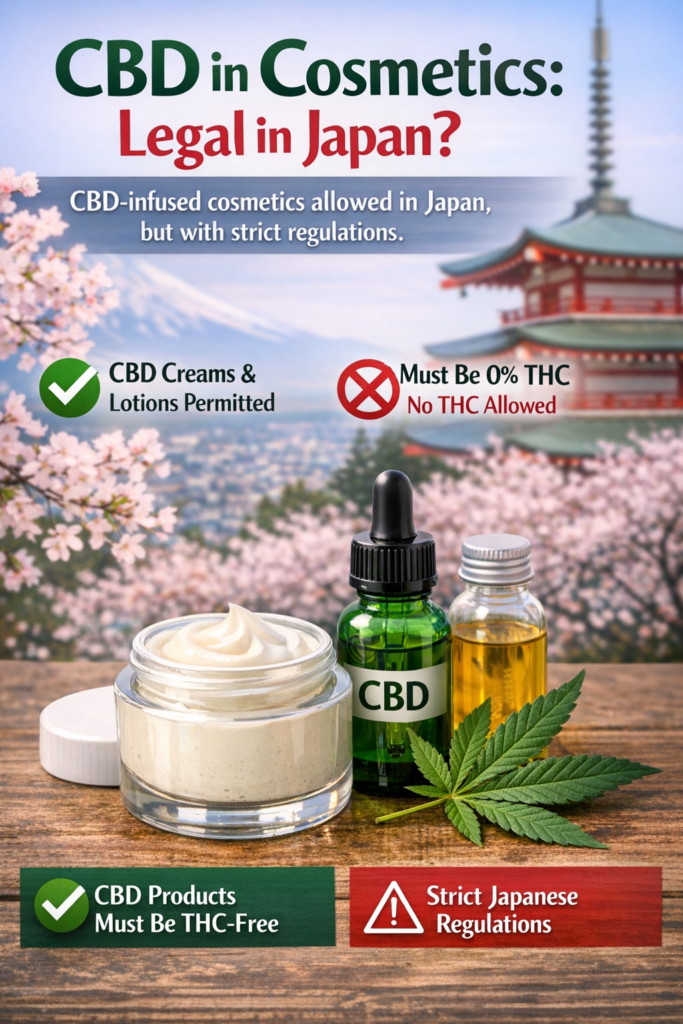
CBD-infused cosmetics are becoming increasingly popular worldwide, but Japan’s stance on this industry is cautious. While Japan permits certain cosmetic products, such as lotions and creams, that contain CBD, these products must meet the stringent standards set forth by regulatory bodies. As with other CBD products, cosmetics infused with CBD must be free of THC to comply with Japanese law.
CBD and Travel to Japan
Traveling with CBD products to Japan is a risky venture, as customs regulations are extremely strict. Although CBD products that meet the legal criteria may be allowed, travelers must be prepared for thorough scrutiny at customs. It is essential to ensure that any CBD products brought into Japan are compliant with local laws, and travelers should be cautious when carrying such products across borders.
What Happens If You Violate CBD Laws in Japan?
The consequences of violating CBD laws in Japan can be severe. Individuals caught possessing illegal CBD products can face hefty fines or imprisonment. The Japanese government takes a zero-tolerance approach to drug-related offenses, and even CBD products that are legally available in other countries can result in legal trouble if they do not meet Japan’s strict standards.
Public Perception of CBD in Japan
The public perception of CBD in Japan is somewhat conservative. Given the nation’s historical stance on cannabis and related substances, many Japanese citizens remain wary of CBD products. While CBD’s potential health benefits are beginning to gain some recognition, there is still significant cultural resistance to cannabis-derived products, which may influence future legal developments.
Recent Developments in CBD Legislation in Japan
Recent years have seen some gradual shifts in Japan’s attitude toward CBD, with the government showing increasing openness to the potential benefits of non-psychoactive cannabis compounds. However, these developments are still in their early stages, and the country has yet to fully embrace widespread CBD legalization. Businesses looking to enter the Japanese CBD market should closely monitor these changes for any opportunities that may arise.
Case Study: Legal CBD in Japan’s Medical Industry
While medical CBD remains limited in Japan, there have been some case studies where CBD has been successfully integrated into Japan’s medical system. These cases, however, are rare and usually involve strict governmental oversight. As research into CBD’s medical benefits continues, there is potential for expansion in this area, though significant regulatory hurdles remain.
The Future of CBD in Japan
The future of CBD in Japan remains uncertain, though there is hope for gradual acceptance. As global awareness of CBD’s potential therapeutic applications grows, Japan may eventually soften its approach to CBD regulation. However, this will likely require substantial shifts in public opinion and government policy, both of which are slow-moving processes in Japan.
Conclusion
In conclusion, while CBD products are not fully legalized in Japan, there are certain exceptions that allow for the importation and use of hemp-derived CBD that is free of THC. The legal landscape remains complex and subject to ongoing changes. As Japan navigates its relationship with cannabis-related substances, businesses and consumers must stay informed and cautious when it comes to CBD usage. Understanding the laws and regulations surrounding CBD will be key to ensuring compliance and avoiding legal repercussions in Japan.