
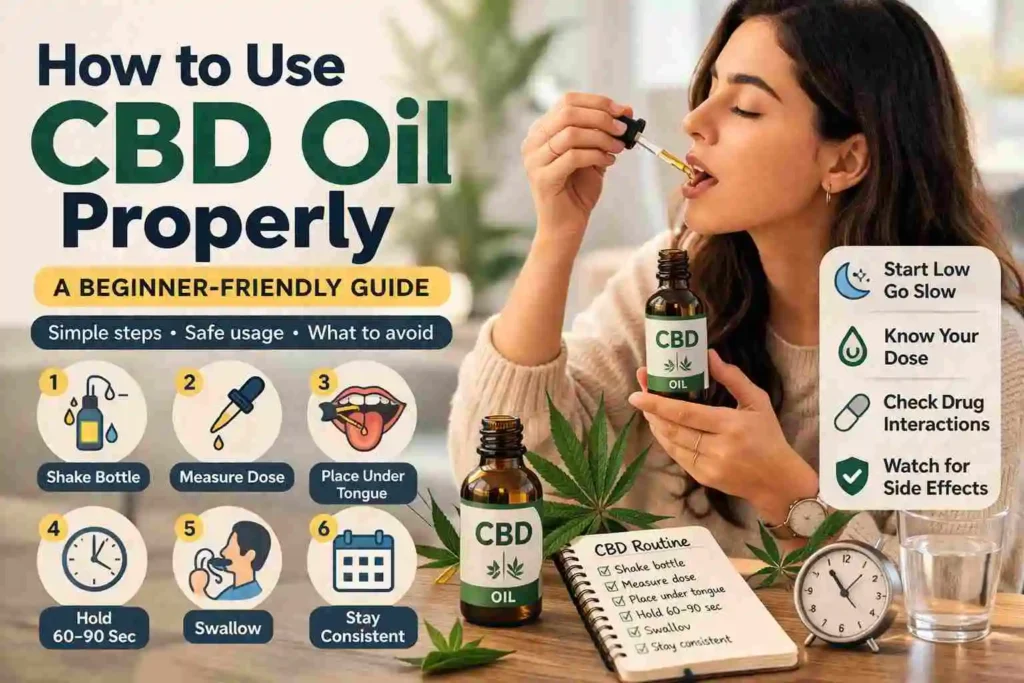
If you’re a first-time CBD user, a health-conscious adult exploring hemp-derived wellness, or someone in Pakistan trying to figure out how to use CBD oil without getting it wrong, you’re probably dealing with the same problems most beginners face: confusing instructions, mixed advice on dosage, uncertainty about timing, and worries about side effects, legality, or accidentally buying into hype. CBD Pakistan helps cut through that confusion by explaining how CBD oil is typically used, what good usage habits look like, and what readers should understand before making CBD part of a wellness routine.
Here’s the thing: most people do not struggle with CBD because it is complicated. They struggle because the internet makes simple things look precise when they are not.
One site says “take two drops.” Another says “take half a dropper.” Someone on social media says use it morning and night. Then a seller throws around vague phrases like “as needed” and expects that to count as guidance.
That is not real instruction. That is guesswork dressed up as confidence.
Why using CBD oil “properly” matters
Using CBD oil properly matters because method, timing, frequency, and dose all affect the experience. It also matters because CBD can cause side effects, interact with other medications, and affect people differently depending on the product and the person. Mayo Clinic and FDA both warn that CBD is not risk-free and should not be treated like a harmless wellness trend.
In plain language: taking CBD badly does not just waste product. It can also lead to disappointment, avoidable side effects, or unrealistic expectations.
What is the most common way to take CBD oil?
The most common way people take CBD oil is sublingually, which means placing it under the tongue and holding it there briefly before swallowing. This method is widely described in consumer and clinical guidance because it may allow some absorption through tissues under the tongue before the rest is swallowed.
How to take CBD oil under the tongue
A beginner-friendly method looks like this:
- Shake the bottle if the product instructions say to do so.
- Measure the amount using the dropper based on the product label, not random internet advice.
- Place the oil under your tongue.
- Hold it there briefly before swallowing.
- Stay consistent with timing instead of changing your routine every day.
That is the basic process. Nothing exotic.
How long should you hold CBD oil under your tongue?
There is no single universal rule, but consumer guidance commonly recommends holding sublingual CBD for around 60 to 90 seconds before swallowing. Some sources say about a minute; others suggest a little longer. The broader point is consistency, not fake precision.
So no, you do not need to stand in your kitchen timing 83 seconds exactly. Just do not swallow it immediately and then pretend you used the product the same way it was intended.CBD FAQs
How much CBD oil should beginners use?
This is where people want a perfect answer and usually get a bad one.
There is no universal beginner dose that fits everyone. CBD research uses widely different doses depending on the condition, the formulation, and the study design. WebMD notes that doses used in clinical trials have ranged widely, and Mayo Clinic makes clear that evidence outside specific prescription uses is still limited.
A safer, more honest approach for general wellness readers is:
- start with the lowest practical amount listed on the product label
- use the same amount consistently for several days
- watch for how you feel
- avoid increasing too quickly
- do not mix guesswork with impatience
How often should you use CBD oil?
There is no single official frequency for everyone, but many consumer-facing instructions describe CBD oil as being used once or twice daily, depending on the product and the intended use.
The smarter approach is to match frequency to purpose:
- Once daily may be enough for people using it as part of a general routine.
- Twice daily may be how some products are used based on label guidance.
- Inconsistent use makes it harder to judge how your body responds.
Here’s the mistake to avoid: changing dose, timing, and frequency all at once. If you do that, you will not know what is actually affecting you.
How long does CBD oil take to work?
This depends on how you take it, your body chemistry, the product formulation, and whether you have eaten recently. Sublingual CBD is often described as acting faster than products that are swallowed directly, with consumer guidance commonly citing a rough window of 15 to 30 minutes for noticeable effects in some users.
That does not mean everyone feels the same thing in the same time window.
Some people notice relaxation sooner. Others notice very little at first. And some are expecting a dramatic effect that CBD is not really known for producing.
What mistakes should users avoid?
This section matters because most “CBD didn’t work” stories are really “I used it badly” stories.
1. Taking too much too soon
More is not automatically better. CBD has side effects, and jumping up too quickly can increase the chance of drowsiness, stomach upset, or general discomfort.
2. Ignoring the product label
A product’s concentration matters. “A few drops” means nothing unless you know how much CBD is actually in those drops.
3. Swallowing it immediately
If you are using CBD oil sublingually, swallowing it right away defeats the point of that method.
4. Expecting a cannabis-style “high”
CBD is generally described as non-intoxicating. If you are waiting for a euphoric THC-like effect, you are misunderstanding the product.
5. Mixing it with medications without thinking
This is one of the biggest blind spots. CBD can interact with other medications, and FDA specifically warns about this.
For common questions, use this internal link here:
CBD FAQs
Can CBD oil get you high?
Usually, no.
CBD itself is generally described as non-intoxicating, unlike THC, which is the compound most associated with the classic cannabis high. That said, product quality matters, and some products may contain THC or be poorly labeled.
Are there any side effects or drug interactions?
Yes, and pretending otherwise would be careless.
Commonly discussed side effects include:
- drowsiness
- fatigue
- dry mouth
- stomach upset
- diarrhea
- appetite changes
More importantly, FDA warns that CBD can interact with other medications and may increase or decrease the effects of certain drugs. CBD also has known liver-related safety concerns in some contexts.
That means extra caution makes sense for people taking:
- blood thinners
- anti-seizure medicines
- sleep medications
- anti-anxiety medications
- other prescription medicines metabolized by the liver
If you are using any regular medication and still treating CBD like harmless flavored oil, that is not caution. That is denial.
Is CBD oil legal in Pakistan?
This needs careful wording.
Pakistan has an active regulatory structure around cannabis through the Cannabis Control & Regulatory Authority and the National Cannabis Control and Regulatory Policy – 2025. That means the better explanation is not “CBD is simply illegal,” but that the legal environment is regulated and evolving, and users should look at product source, formulation, THC content, and current rules before making assumptions.
Final takeaway
Using CBD oil properly is less about magic technique and more about basic discipline: use the product the way it is intended, start conservatively, stay consistent, pay attention to timing, and do not ignore side effects or drug interactions. Sublingual use under the tongue is the most common approach, but there is no single dose or frequency that fits everyone.