People usually start looking into CBD oil when something feels off and the usual fixes are not doing enough. Sleep gets lighter. Stress becomes constant. Pain lingers. Recovery drags. In Pakistan, that can mean a student in Lahore staring at the ceiling after midnight, an office worker in Karachi carrying daily tension through the neck and shoulders, or someone dealing with ongoing discomfort and wanting an option that feels less heavy than a drawer full of medicines. CBD Pakistan helps readers make sense of that search by explaining how hemp-derived CBD may work, what benefits people commonly look for, and where caution still matters.
Most people do not search for CBD out of curiosity alone. They search because something in daily life is not working well.
That matters, because the real question is not whether CBD sounds impressive on paper. It is whether it may be useful for stress, sleep, pain, or recovery in the kind of real-world situations people are actually dealing with.
Why so many people are looking at CBD oil for daily wellness
CBD, or cannabidiol, has become widely discussed because it is generally described as non-intoxicating and is being studied for a range of possible therapeutic uses, especially around anxiety, sleep, pain, and inflammation. But the evidence is mixed depending on the condition, product type, dose, and study quality. Mayo Clinic notes that research on CBD’s benefits is still limited outside a small number of specific approved medical uses.
That is why the right framing is potential benefits, not guaranteed results.
What is CBD oil useful for?
Based on current clinical summaries and reviews, people most often use or ask about CBD oil for:
- stress and anxiety support
- sleep support
- pain and discomfort
- inflammation-related concerns
- general recovery and wellness support
That does not mean every claim is equally strong. It means these are the most common use cases tied to both consumer interest and current research. The strongest established prescription use for cannabidiol remains certain seizure disorders, not general lifestyle wellness.
For product-related information, add this internal link naturally:
CBD Oil
How CBD oil may support stress and mental calm
Stress is one of the main reasons people start reading about CBD. That part is not surprising. What matters is saying it honestly.
What the current evidence suggests
Research suggests CBD may have potential to help with anxiety symptoms in some contexts, and recent reviews note possible benefit for anxiety and sleep disturbances, although the evidence remains heterogeneous and not fully settled. A 2019 case series found that many patients in a clinical setting reported improved anxiety scores, though this type of evidence is not the same as large, definitive trials.
That means CBD should be discussed as a possible support tool, not a miracle fix for chronic stress or anxiety.
Why “calm” is not the same as being high
A lot of first-time readers mix up relaxation with intoxication. They are not the same.
CBD is generally described as non-intoxicating, unlike THC, which is the cannabinoid most associated with the classic cannabis high. Some people may feel calmer or more settled with CBD, but that should not be described as getting high.
Can CBD oil help with sleep?
Sleep is another major search driver, especially for people whose sleep problems are tangled up with stress, overthinking, discomfort, or irregular schedules.
CBD and sleep quality
Some evidence suggests CBD may help improve sleep in certain people, especially when sleep issues are linked to anxiety or stress. The clinical picture is still uneven, but sleep disturbances repeatedly show up in the research as one of the areas of interest.
That is the right tone for this section: promising enough to be relevant, not strong enough to overclaim.
What may affect how it feels from person to person
CBD does not hit every person the same way. The result may vary depending on:
- dose
- product formulation
- delivery method
- body chemistry
- other medications
- whether the underlying issue is stress, pain, or something else entirely
That variability is one reason health authorities warn people not to assume CBD is risk-free or universally effective.
Potential benefits of CBD oil for pain and discomfort
Pain is where content on CBD usually gets either lazy or dishonest.
A smarter approach is this: say what the evidence suggests, then stop pretending that means certainty.
What research says about pain and inflammation
Research reviews suggest CBD may have analgesic and anti-inflammatory potential, and some authors conclude it could help reduce certain types of pain. At the same time, the quality of evidence varies, and findings are not consistent enough to treat CBD as a universal pain solution.
That is why phrases like “may support discomfort management” are stronger than flashy promises. They sound less exciting, but they are more defensible.
Why people with day-to-day body strain keep asking about it
Not everyone searching “CBD pain benefits” is dealing with a diagnosed condition. Sometimes it is simpler than that.
It is the person who sits for ten hours and feels stiff every evening. It is the parent who sleeps badly and wakes up sore. It is the gym-goer whose recovery drags longer than it used to. Those people are not necessarily asking for a cure. They are asking whether CBD may help take the edge off.
That search intent is legitimate. The mistake is turning that curiosity into certainty.
Can CBD support recovery after exercise or physical strain?
This is one of the most commercially attractive angles, but it needs discipline.
The theory behind CBD and recovery usually centers on its possible relationship to inflammation, discomfort, sleep quality, and relaxation. In plain English: if a compound may help some people sleep better, feel less stressed, or manage discomfort, it makes sense that people connect it with recovery. But direct evidence for “recovery” as a standalone claim is thinner than the marketing language usually suggests.
So the responsible answer is:
CBD may support recovery indirectly by influencing factors like discomfort, rest, and relaxation, but it should not be presented as a proven recovery shortcut.
How CBD oil works in the body
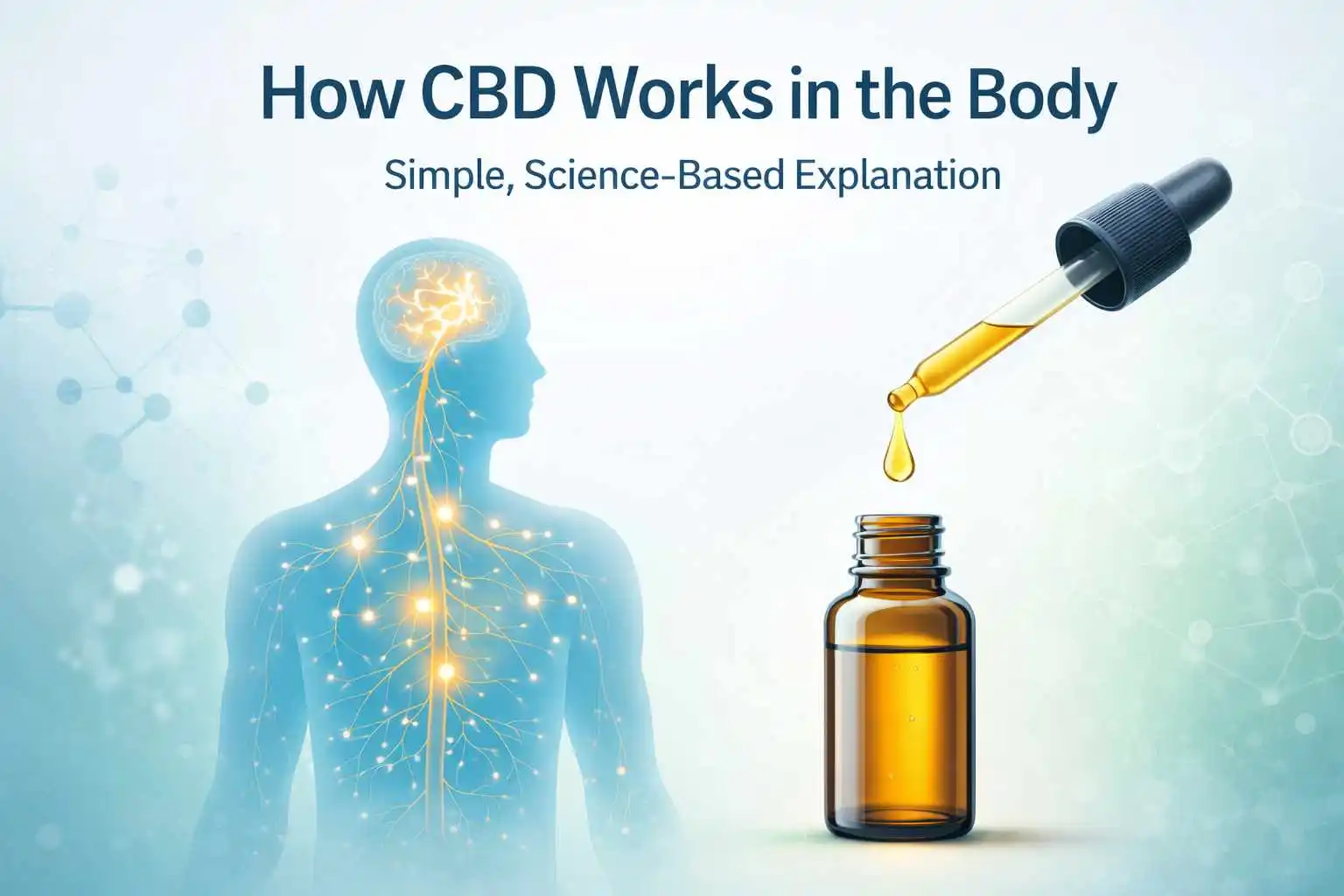
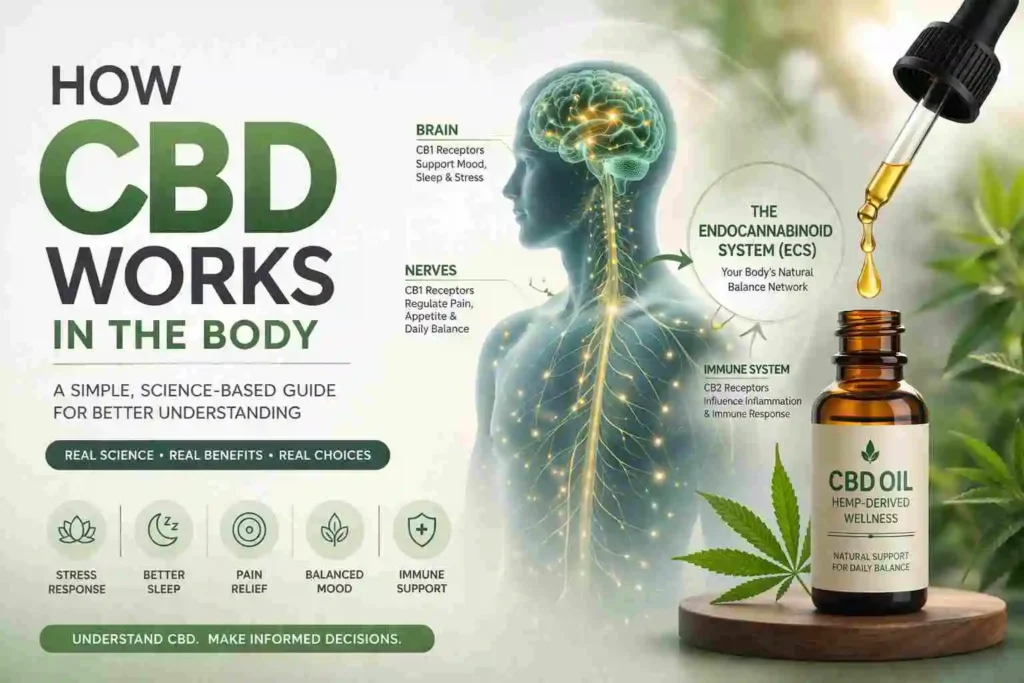
CBD is thought to interact with the body’s endocannabinoid system and with other signaling pathways involved in mood, stress response, pain signaling, inflammation, and sleep regulation. Researchers often describe its action as broader and more indirect than THC.
Is CBD oil considered a drug?
This depends on the context.
Cannabidiol itself is a compound. Some CBD-based products are sold in wellness markets, while specific formulations have also been developed as prescription medicines for narrow medical uses. FDA-linked and Mayo Clinic guidance both make this distinction clear: not every CBD product is an approved medicine, but some cannabidiol-based products do have formal medical use.
That means the article should avoid black-and-white wording. “It is a drug” and “it is not a drug” are both too crude without context.
Is CBD oil legal in Pakistan?
This section needs careful wording because bad legal content destroys trust.
Pakistan has a formal cannabis regulatory framework through the Cannabis Control and Regulatory Authority and the National Cannabis Policy 2025. That means readers should not rely on outdated claims or broad social media statements. The better phrasing is that CBD-related regulation in Pakistan is evolving and should be checked based on product type, source, formulation, and THC content.
Use this internal link naturally here:
CBD FAQs
How to approach CBD more carefully in Pakistan
If this feels confusing, that is normal. The market is noisy.
A more sensible approach looks like this:
- Understand what benefit you are actually looking for: stress, sleep, pain, or recovery
- Read how CBD works before assuming what it does
- Avoid products making cure-all promises
- Be cautious if you take other medications, since CBD can interact with some drugs
- Treat side effects seriously, including drowsiness, diarrhea, reduced appetite, fatigue, or mood changes
Final takeaway
CBD oil is most often discussed for its potential benefits around stress, sleep, pain, and recovery. The current evidence suggests real promise in some of these areas, but not enough to justify exaggerated claims or lazy health advice. It is generally described as non-intoxicating, but it can still cause side effects and drug interactions, and the legal picture in Pakistan should be treated as regulated and evolving.