
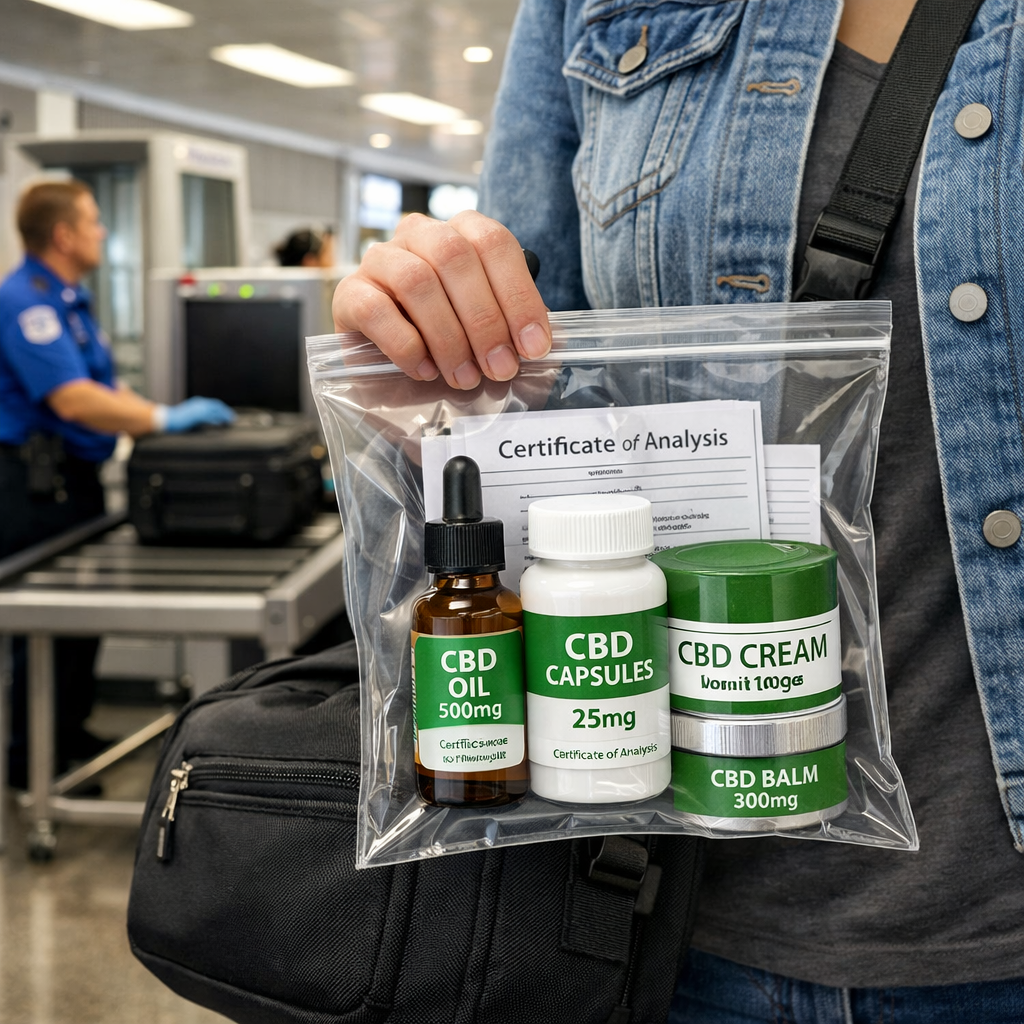
With the growing popularity of cannabidiol (CBD) in recent years, many travelers wonder, “Can you bring CBD on a plane?” Understanding the legalities and practicality of bringing CBD products on a plane is essential for a smooth travel experience. Whether for personal use or as part of your health regimen, knowing what the rules and regulations are when it comes to CBD and air travel is crucial. While CBD offers potential therapeutic benefits, traveling with it requires understanding complex legal frameworks and airline-specific guidelines. Here’s a comprehensive guide to help you navigate the question: Can you bring CBD on a plane?
Can You Bring CBD on a Plane? Understanding Its Legal Status
CBD is a non-psychoactive compound derived from the cannabis plant, specifically from hemp. Unlike THC (tetrahydrocannabinol), the primary psychoactive ingredient in cannabis, CBD does not produce a “high,” making it legal in many places. However, the legal status of CBD varies depending on the country, state, or region. In the United States, the 2018 Farm Bill legalized hemp-derived CBD products that contain less than 0.3% THC. Despite this federal legalization, individual states may impose their own restrictions, making it vital for travelers to be aware of local laws at both their departure and arrival destinations. This brings up the important question: Can you bring CBD on a plane legally, even if you are traveling between states?
Internationally, CBD’s legality is much more complicated. Some countries embrace it for medicinal use, while others maintain strict prohibition, even for non-psychoactive CBD. Understanding these differences before embarking on international flights is crucial to avoid complications at customs.
TSA Guidelines: Can You Bring CBD on a Plane Safely?
In the United States, the Transportation Security Administration (TSA) is responsible for regulating what passengers can and cannot bring on flights. While the TSA does not actively search for CBD, their guidelines stipulate that CBD products derived from hemp and containing no more than 0.3% THC are permitted in both carry-on and checked baggage. However, this does not necessarily mean that you will be exempt from further scrutiny.
TSA officers are primarily concerned with ensuring safety, so if you bring CBD products in your luggage, they may inspect them. While CBD oil, creams, and capsules may be allowed, it’s important to make sure your product clearly complies with federal regulations—this means packaging should include a certificate of analysis (COA) that details the THC content. If the THC concentration is above 0.3%, the product could be confiscated, and you could face legal consequences. This emphasizes the importance of checking whether you can bring CBD on a plane according to TSA rules.
International Travel: Can You Bring CBD on a Plane Across Borders?
Flying internationally with CBD can be a different story. Although many countries have loosened their stance on CBD, several still enforce harsh penalties for possessing even small amounts of cannabis-derived products. For example, countries like the United Arab Emirates, Singapore, and Japan have stringent cannabis laws, and even trace amounts of THC can lead to serious legal trouble.
Before booking your flight, it’s critical to research the legal status of CBD in your destination country. Even if CBD is legal in the country you’re departing from and the country you’re arriving in, you may still encounter customs challenges. In some cases, CBD might be classified as a controlled substance in the eyes of international law, irrespective of its THC content. Travelers should always err on the side of caution and avoid carrying CBD on international flights unless absolutely necessary.
Types of CBD Products: What Can You Bring on a Plane?
Not all CBD products are created equal, and some are more portable and travel-friendly than others. Here are the most common types of CBD products travelers might consider:
- CBD Oil/Tinctures: While the TSA allows CBD oil on flights, there are restrictions on liquid volumes. Travelers must adhere to the standard 3.4-ounce liquid limit for carry-ons. It’s recommended to carry CBD oil in smaller containers and ensure the product is well-labeled with its THC content.
- CBD Capsules and Gummies: These products are typically easy to travel with and unlikely to raise concerns. Since they do not fall under the liquid category, you won’t face the same volume restrictions as with oils. However, as with all CBD products, they must meet the legal requirements of the jurisdiction you’re traveling through.
- CBD Topicals (Creams, Balms, Lotions): CBD-infused creams and balms are often a go-to for travelers looking to bring CBD products for muscle relaxation or skin care. These topicals are generally allowed in both carry-on and checked luggage since they are not liquid-based, but they should still comply with any relevant THC content limits.
- CBD Vape Products: Vaping on airplanes is generally prohibited, including the use of CBD vape pens. While the vape products themselves may not be illegal, their use could be deemed a violation of airline policies. Additionally, bringing CBD vape products could complicate matters in countries where vaping laws are stricter.
Practical Tips for Bringing CBD on a Plane Without Issues
While CBD products may be legal in certain places and permissible on flights, it’s still important to follow some practical tips to ensure a smooth travel experience:
- Carry Documentation: Always have supporting documentation, such as a certificate of analysis (COA), for your CBD products to prove that they contain less than 0.3% THC. This can be particularly helpful in case your products are scrutinized by security or customs agents.
- Know the Local Laws: Before traveling, research the laws surrounding CBD in both your departure and arrival locations. Some countries or states may have specific rules about how CBD products should be transported, and others may prohibit them entirely.
- Use Discreet Packaging: Although CBD is not typically something to be concerned about, using discreet packaging for your products can help avoid unnecessary attention. Opt for smaller containers that are easily portable and non-prominent in your luggage.
- Check Airline Policies: Different airlines may have varying policies regarding the transportation of CBD products. It’s always a good idea to check with the airline before flying to ensure they have no specific restrictions on CBD.
What to Do If CBD Is Seized
If your CBD product is seized by airport authorities, it’s important to remain calm and comply with any instructions from security officers. In the worst case, if you are caught with a product exceeding the legal THC limit or in violation of international laws, you could face penalties, including fines or arrest. The best defense is ensuring your products meet all legal requirements and have proper documentation.
Conclusion
In conclusion, can you bring CBD on a plane? Yes, but with several important considerations. While hemp-derived CBD products with less than 0.3% THC are generally allowed within the U.S., the rules become more complex when traveling internationally. It’s crucial to check the legal status of CBD in both your departure and arrival locations, ensure that your products are compliant, and be prepared for inspection if necessary. By following TSA guidelines, understanding international travel laws, and using discretion, travelers can bring CBD on a plane without encountering major issues. However, always take the necessary precautions to avoid legal trouble and ensure a smooth flight experience.