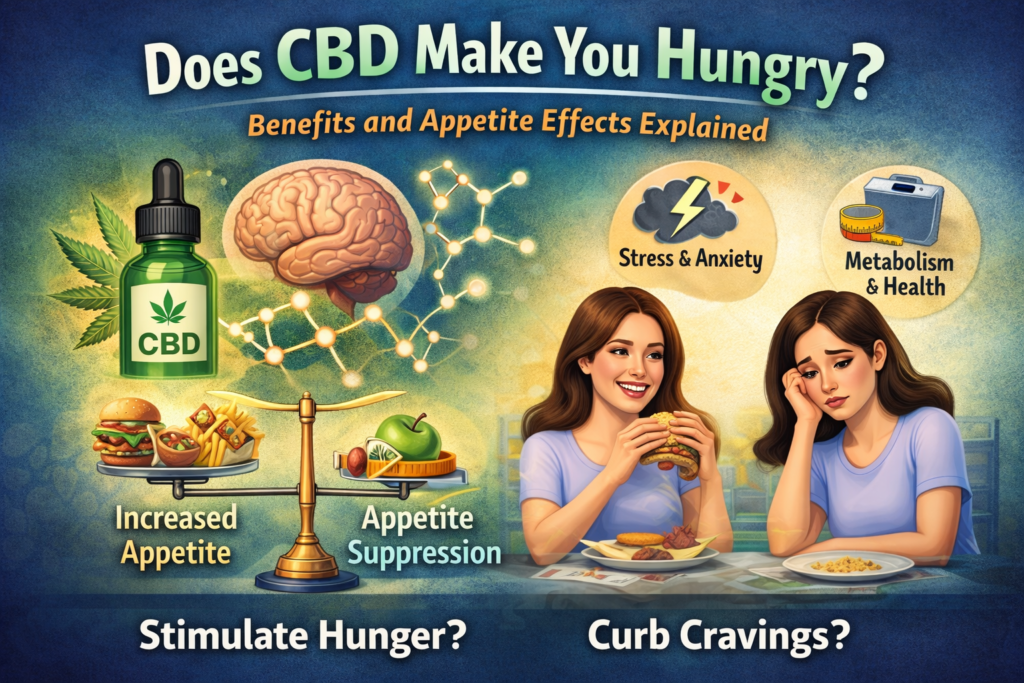
Cannabidiol (CBD) has gained significant attention in recent years due to its purported therapeutic benefits, including pain relief, anxiety reduction, and anti-inflammatory properties. As its popularity continues to rise, people are becoming more curious about how CBD affects various aspects of health, one of which is appetite. The question, “Does CBD make you hungry?” has garnered a great deal of interest, as many users claim that CBD increases their appetite, while others find it to be neutral or even appetite-suppressing. This article aims to explore the relationship between CBD and hunger, addressing the scientific evidence, mechanisms involved, and personal experiences of users.
How Does CBD Influence Hunger and Appetite?
CBD is one of the many compounds found in the cannabis plant, known as cannabinoids. Unlike its more famous counterpart, THC Cannabidiol (CBD) has gained significant attention in recent years due to its purported therapeutic benefits, including pain relief, anxiety reduction, and anti-inflammatory properties. As its popularity continues to rise, people are becoming more curious about how CBD affects various aspects of health, one of which is appetite. The question, “Does CBD make you hungry?” has garnered a great deal of interest, as many users claim that CBD increases their appetite, while others find it to be neutral or even appetite-suppressing. This article aims to explore the relationship between CBD and hunger, addressing the scientific evidence, mechanisms involved, and personal experiences of users.
How Does CBD Affect Hunger and Appetite Regulation?
CBD is one of the many compounds found in the cannabis plant, known as cannabinoids. Unlike its more famous counterpart, THC (tetrahydrocannabinol), CBD does not produce a “high.” Instead, it interacts with the body’s endocannabinoid system (ECS), which plays a crucial role in regulating numerous physiological processes, including mood, sleep, pain, and appetite. The ECS consists of cannabinoid receptors, endogenous cannabinoids, and enzymes that work together to maintain homeostasis, or balance, in the body.
CBD is believed to influence appetite by modulating the ECS. However, its impact on hunger is not straightforward and may depend on various factors such as dosage, individual body chemistry, and the specific condition being treated. So, does CBD make you hungry? The answer isn’t simple, as it depends on the individual and the context.
How Does CBD Impact Hunger Through the Endocannabinoid System (ECS)?
- Modulation of Appetite Through the ECS and CBD’s Role
The ECS is heavily involved in regulating hunger and satiety. One of the key components in this process is the CB1 receptor, which is found in the brain and peripheral tissues. When activated, the CB1 receptor can stimulate hunger, leading to increased food intake. THC is known to bind to this receptor, which is why it is often associated with the “munchies” effect.
CBD, on the other hand, has a more complex relationship with the CB1 receptor. While it does not directly activate the CB1 receptor in the same way as THC, some studies suggest that CBD may indirectly influence appetite by modulating the activity of the ECS. For example, CBD can inhibit the breakdown of anandamide, an endogenous cannabinoid that promotes feelings of well-being and appetite regulation. By increasing anandamide levels, CBD may encourage appetite under certain conditions. So, does CBD make you hungry? It could, but not in the same way THC does.
- Can CBD Help Regulate Appetite and Manage Stress-Induced Eating?
Many people use CBD to manage stress, anxiety, and other emotional factors that affect their eating habits. Stress can lead to either overeating or a loss of appetite, depending on the individual. Research indicates that CBD may help alleviate stress by promoting a sense of calm and relaxation. By reducing anxiety, CBD might help regulate appetite in people who experience stress-induced eating or a lack of appetite due to anxiety. In this way, CBD may have a stabilizing effect on eating patterns for some individuals.
- Does CBD Stimulate Hunger or Suppress Appetite?
Interestingly, there are also reports suggesting that CBD may suppress appetite in some cases. This is particularly true at higher doses or when CBD is used to manage certain conditions like obesity or metabolic disorders. CBD’s potential to regulate glucose metabolism and fat storage may contribute to its appetite-suppressing effects. Additionally, CBD’s ability to interact with serotonin receptors may play a role in modulating hunger signals, as serotonin is involved in mood regulation and appetite control.
What Are the Factors That Influence CBD’s Impact on Hunger and Appetite?
- Does CBD Make You Hungry Based on Dosage?
The effects of CBD on appetite can vary depending on the dosage. At lower doses, CBD may have a more subtle impact on hunger, promoting a balanced appetite and overall sense of well-being. However, higher doses of CBD may elicit different responses, potentially leading to appetite suppression or increased hunger, depending on the individual’s unique biology and health conditions. It is essential to find the optimal dosage for each person to experience the desired effects on appetite.
- How Do Individual Responses to CBD Affect Hunger and Appetite?
Every individual’s body responds differently to CBD, and factors such as genetics, metabolism, and overall health can influence the compound’s impact on hunger. Some people may find that CBD helps curb cravings, while others may experience an increase in hunger. Additionally, the method of CBD consumption (e.g., oil, edibles, vapes) can also affect its onset and duration of action, which may play a role in appetite changes.
- How CBD Affects Appetite in People with Specific Health Conditions
The way CBD affects hunger can also be linked to specific health conditions. For example, individuals with conditions like Crohn’s disease or irritable bowel syndrome (IBS) may experience changes in appetite due to CBD’s anti-inflammatory effects. Similarly, people with sleep disorders may find that CBD improves their sleep, which can indirectly impact their eating habits by stabilizing hunger cues.
Does CBD Make You Hungry? The ‘Munchies’ Effect and What Research Says
The “munchies” phenomenon, commonly associated with THC, is not typically linked to CBD. However, there is some evidence that CBD may indirectly lead to an increase in appetite for certain individuals. Studies examining CBD’s impact on appetite regulation have shown mixed results, with some participants reporting an increased desire to eat, while others experience no change or a decrease in hunger. This inconsistency may be due to the various factors mentioned earlier, such as dosage, individual response, and the specific health condition being treated.
In one study published in Frontiers in Pharmacology, researchers found that CBD could increase appetite in mice by promoting the activity of the CB1 receptor in certain brain regions. However, the results were not conclusive, and further studies are needed to determine whether CBD has a consistent effect on appetite in humans.
Conclusion: Does CBD Make You Hungry?
The effects of CBD on hunger are complex and vary widely depending on individual factors such as dosage, health conditions, and body chemistry. While some people report an increase in appetite, others find that CBD has little effect or even suppresses hunger. The relationship between CBD and appetite is influenced by its interaction with the endocannabinoid system, stress levels, and metabolic processes.
Ultimately, CBD may have the potential to regulate appetite in a way that benefits some individuals, particularly those experiencing stress or appetite fluctuations due to specific health conditions. However, more research is needed to fully understand the mechanisms behind CBD’s impact on hunger. As with any supplement, it is important to consult with a healthcare provider to determine the appropriate dosage and usage for individual needs.